
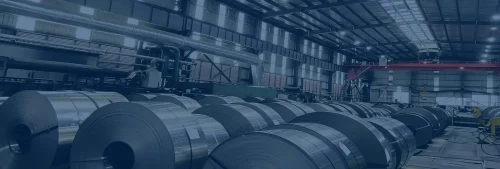
What Is Silicon Steel
I. Basic Definition of Silicon Steel
Baja silikon typically contains 1% to 4.5% silicon by mass, a balanced range validated through long-term industrial practice. Adding silicon drastically modifies the electromagnetic properties of iron: on one hand, it boosts magnetic permeability to facilitate magnetic flux passage; on the other, it cuts eddy current loss and curtails energy waste.
Nevertheless, excessively high silicon content yields adverse effects. Once silicon content exceeds 4.5%, the material becomes overly brittle and prone to cracking during rolling processes.
In practical engineering applications, baja silikon falls into two core categories: non-oriented baja silikon and grain-oriented silicon steel. Non-oriented silicon steel features randomly distributed crystal grains, delivering nearly uniform magnetic performance in all directions, making it ideal for rotating electrical machines. Grain-oriented silicon steel undergoes specialized processing to align crystal grains in a single direction, exhibiting superior magnetic properties along the rolling direction, and is primarily used for transformer cores.
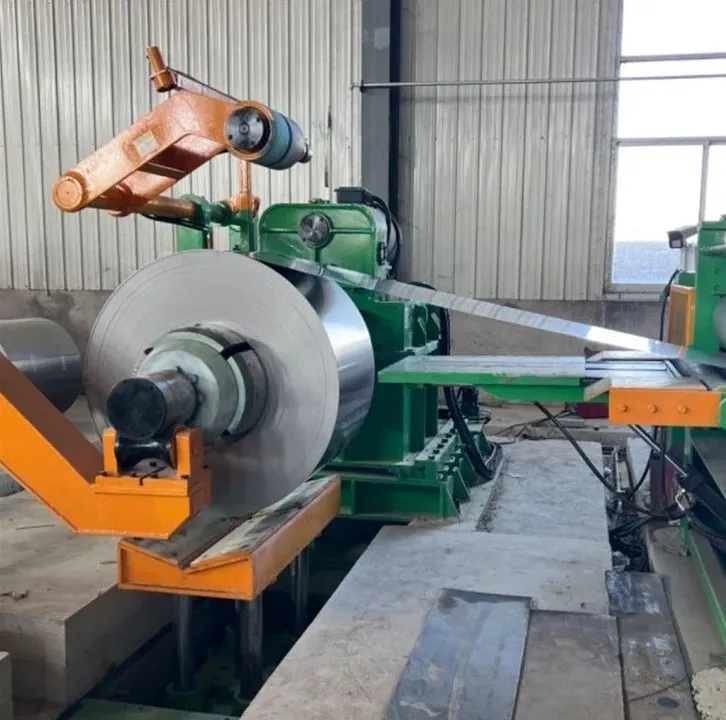
II. Trade-offs in Silicon Content Selection
Multiple key metrics must be weighed when determining silicon content. Silicon steel with approximately 3% silicon already achieves sufficiently high magnetic permeability. Further raising silicon content delivers more pronounced reductions in core loss yet triggers a sharp drop in tensile strength of the material.
Accordingly, silicon steel for electric motors generally adopts a balanced silicon content of 1%–3%, while high-grade grain-oriented silicon steel for power transformers may contain over 3.5% silicon.
Among magnetic performance indicators, core loss (unit: W/kg) is the most critical parameter, consisting of hysteresis loss and eddy current loss. Hysteresis loss is governed by silicon content and grain orientation, whereas eddy current loss is directly correlated with the thickness of silicon steel sheets. Modern mainstream thin-gauge products range from 0.23 mm to 0.35 mm, slashing eddy current loss substantially compared with the traditional 0.5 mm sheets.
III. Typical Application Scenarios
Equipment imposes vastly divergent requirements on silicon steel. Small electric motors demand a balance between cost and performance, hence medium-to-low grade non-oriented silicon steel is widely adopted. Large power transformers, by contrast, prioritize minimizing no-load loss and therefore deploy high-magnetic-flux grain-oriented silicon steel, despite its significantly higher cost.
Magnetic domain refined silicon steel represents a recent advancement; laser treatment further reduces core loss, suiting applications with stringent energy efficiency standards.
Selecting the proper silicon steel grade inherently requires comprehensive evaluation of electromagnetic performance, mechanical workability and cost. Only by clarifying the equipment’s operating frequency, loss limits and budget can an optimal balanced solution be identified.





 English
  Japanese
  Korean
  French
  German
  Spanish
  Portuguese
  Russian
  Arabic
  Italian
  Turkish
  Dutch
Dutch  Polish
  Swedish
  Danish
  Norwegian
  Finnish
  Greek
Greek  Hungarian
  Czech
Czech  Romanian
  Bulgarian
  Slovenian
  Croatian
  Slovak
  Malay
Malay  Indonesian
  Thai
Thai  Vietnamese
  Myanmar
  Khmer
Khmer  Lao
Lao  Tagalog
  Hindi
Hindi  Bengali
  Urdu
Urdu  Nepali
  Sinhala
  Hebrew
  Ukrainian
  Serbian
  Icelandic
  Swahili