
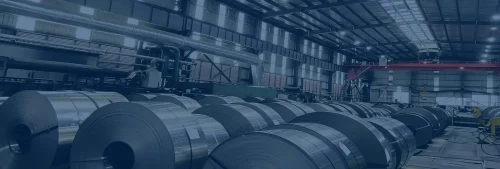
Composition Analysis of Silicon Steel for Generators
I. Base Matrix Composition of Silicon Steel
Baja silikon for generators acts as the “highway” in electromagnetic systems, featuring a simple yet sophisticated base formula:
- Iron: Accounts for over 95%, forming the main magnetic conduction matrix
- Silicon: The optimal mass fraction of 3%–4.5% works like a lubricant to suppress eddy current loss
- Aluminum: A hidden additive at 0.2%–0.5% that collaborates with silicon to boost electrical resistivity
Notably, every 1% rise in silicon content multiplies resistivity by roughly five, yet reduces mechanical strength by 15%. This trade-off determines the grading of baja silikon products.
II. Functional Effects of Trace Elements
Trace additives with total mass fraction below 1% serve as precise performance regulators:
- Manganese (0.1%–0.3%): Improves hot rolling ductility and prevents cracking during rolling
- Sulfur & Phosphorus: Strictly controlled below 0.01% to avoid defects that obstruct magnetic flux
- Carbon: Limited to less than 0.005%. Excess carbon consumes magnetic energy and lowers operational efficiency
Modern manufacturing processes introduce trace boron or nitrogen at the ppm level (0.001%). These elements form energy barriers at grain boundaries to facilitate easier reorientation of magnetic domains.
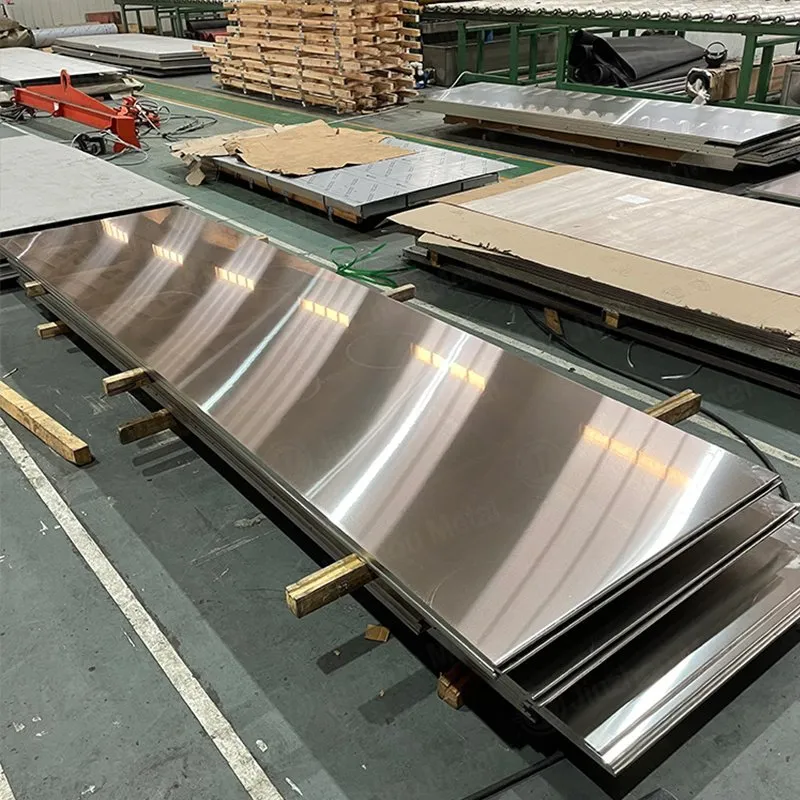
III. Synergy Between Chemical Composition and Processing Technology
Identical chemical formulations deliver vastly different performance under varied fabrication processes:
- Canai panas baja silikon: Silicon content ≤3.3%, applicable to medium and low-frequency generators
- Cold-rolled non-oriented silicon steel: Silicon content 3.5%–4.5%, featuring isotropic magnetic properties
- Hi-B high-induction grain-oriented steel: Alloyed with 0.8%–1.2% aluminum to raise magnetic flux density by 10%
Vacuum smelting restricts harmful gas contents to ppm levels. Under 50 Hz operating conditions, such high-purity silicon steel achieves a 40% reduction in core loss compared with standard grades.



 English
  Japanese
  Korean
  French
  German
  Spanish
  Portuguese
  Russian
  Arabic
  Italian
  Turkish
  Dutch
Dutch  Polish
  Swedish
  Danish
  Norwegian
  Finnish
  Greek
Greek  Hungarian
  Czech
Czech  Romanian
  Bulgarian
  Slovenian
  Croatian
  Slovak
  Malay
Malay  Indonesian
  Thai
Thai  Vietnamese
  Myanmar
  Khmer
Khmer  Lao
Lao  Tagalog
  Hindi
Hindi  Bengali
  Urdu
Urdu  Nepali
  Sinhala
  Hebrew
  Ukrainian
  Serbian
  Icelandic
  Swahili