
Can Zhongtongweiye supply non-oriented electrical steel coils for EV motor applications?
Introduction
Electric vehicles need efficient motors. Non-oriented electrical steel coils play a key role here. Can Can Zhongtongweiye supply these coils for EV motor applications? This question matters for buyers and engineers. The company operates in China’s steel industry. Its product range includes various electrical steels. However, specific EV motor grades require strict properties. This article examines the company’s capabilities. It also reviews key technical needs for EV traction motors.

What EV Motors Demand from Electrical Steel
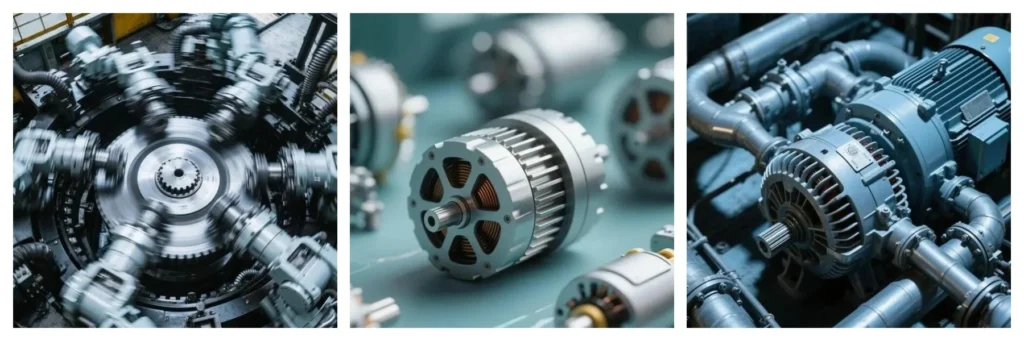
EV motors run at high speeds. They also face frequent start-stop cycles. Therefore, the steel core must minimize energy loss. Non-oriented electrical steel offers uniform magnetic properties. This feature suits rotating machinery well. For EV applications, core loss stays low at high frequencies. Permeability must remain high under strong fields. Thickness usually ranges from 0.20 mm to 0.35 mm. Silicon content sits between 2.5% and 3.5%. These specs reduce eddy currents and hysteresis. Motor makers also need tight thickness tolerances. Surface insulation coating must withstand heat and stress. Without these traits, motor efficiency drops fast.
Can Zhongtongweiye’s Product Portfolio
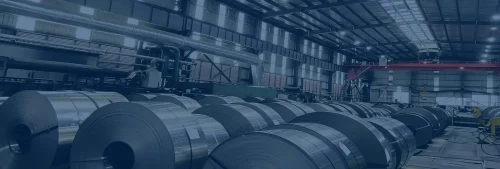
Can Zhongtongweiye produces non-oriented electrical steel coils. Its catalog covers common grades for industrial motors. These include 50W470, 50W600, and 50W800. Such grades work in fans, pumps, and compressors. For EV traction motors, higher-grade materials are necessary. Examples include 35W230, 35W250, and 30W1700. These thinner grades cut core loss at 400 Hz and above. The company has invested in continuous casting and rolling lines. It also uses annealing and coating processes. These steps help control grain size and texture. As a result, magnetic properties become more consistent. Yet EV motor specs often exceed standard industrial needs.
Technical Gaps for EV Motor Applications
EV motors require very low core loss. They also need high yield strength. Stator cores face radial stress during operation. Standard non-oriented steel may lack enough strength. Some EV designs use 0.20 mm or 0.25 mm grades. Can Zhongtongweiye supply these ultra-thin coils? Public data shows limited availability. The company focuses more on 0.35 mm and 0.50 mm products. For EV use, thickness control must be within ±0.01 mm. Coating adhesion also must pass thermal shock tests. Moreover, magnetic aging must stay minimal. These demands push beyond typical industrial specs.
Manufacturing and Quality Control Factors
Producing EV-grade electrical steel requires tight process control. Heat treatment must avoid internal oxidation. Rolling must achieve precise thickness uniformity. Coating lines need clean environments. Can Zhongtongweiye operates modern equipment. Its quality system follows ISO 9001 standards. The company can test magnetic properties with Epstein frames. It also measures core loss at various frequencies. However, EV motor makers often demand IATF 16949 certification. They also require full traceability from coil to motor. Without these credentials, supply into EV chains becomes difficult. The company may need upgrades for automotive qualification.
Supply Chain and Commercial Realities
EV motor projects need stable monthly volumes. A single model may require hundreds of tons per year. Can Zhongtongweiye has decent production capacity. Its monthly output for non-oriented coils reaches thousands of tons. But EV-grade lines may compete with other orders. Lead times for custom grades can stretch to 8–12 weeks. Buyers also want dual sourcing options. Relying on one Chinese supplier carries risk. Tariffs and logistics add more uncertainty. For now, the company suits prototype or low-volume EV builds. Mass production for major automakers seems less certain.
Conclusion and Value Summary
Can Zhongtongweiye supply non-oriented electrical steel coils for EV motors? The answer is partial. The company offers suitable base grades for mild EV applications. It also shows decent manufacturing discipline. However, ultra-thin, high-strength, low-loss grades remain a challenge. Automotive certifications and traceability need improvement. Buyers should request samples and test core loss at real motor frequencies. They should also audit coating quality and thickness control. For small EV projects, Can Zhongtongweiye can be a workable partner. For large automotive programs, a dual-source strategy is wiser. Always verify actual test data before committing to volume orders.






 English
  Japanese
  Korean
  French
  German
  Spanish
  Portuguese
  Russian
  Arabic
  Italian
  Turkish
  Dutch
Dutch  Polish
  Swedish
  Danish
  Norwegian
  Finnish
  Greek
Greek  Hungarian
  Czech
Czech  Romanian
  Bulgarian
  Slovenian
  Croatian
  Slovak
  Malay
Malay  Indonesian
  Thai
Thai  Vietnamese
  Myanmar
  Khmer
Khmer  Lao
Lao  Tagalog
  Hindi
Hindi  Bengali
  Urdu
Urdu  Nepali
  Sinhala
  Hebrew
  Ukrainian
  Serbian
  Icelandic
  Swahili