

What are the typical inner and outer diameters of transformer steel coils
Transformer steel coils play a vital role in electrical equipment. Their dimensions affect performance and efficiency. Engineers often ask about typical inner and outer diameters. This article explains common size ranges for these coils. It also covers key factors that influence those dimensions.
Understanding Transformer Steel Coils
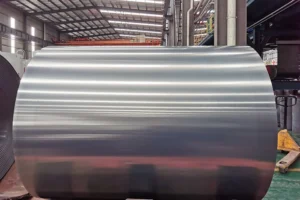
Transformer steel coils consist of thin szilíciumacél sheets. These sheets wind into a cylindrical shape. The coil then sits inside a transformer core. Inner diameter refers to the hollow center. Outer diameter measures the full circle across the coil. Both dimensions must match the core design. A proper fit reduces energy losses. It also prevents vibration and heat buildup.
Typical Inner Diameter Ranges
Inner diameters vary by transformer size and type. For small distribution transformers, the inner diameter often falls between 50 mm and 150 mm. Medium power transformers use inner diameters from 150 mm to 400 mm. Large power transformers may have inner diameters of 400 mm to 800 mm or more. These ranges depend on the core’s cross-sectional area. A larger core needs a wider inner opening. Manufacturers standardize these sizes for common ratings.
Typical Outer Diameter Ranges
Outer diameters follow a similar pattern. Small coils often measure 100 mm to 300 mm across. Medium coils range from 300 mm to 700 mm. Large power transformer coils can reach 700 mm to 1,500 mm. The outer diameter includes the wound steel thickness. More winding layers increase the outer size. Cooling requirements also limit how large the outer diameter can grow.
Factors That Influence Coil Dimensions
Several factors shape these inner and outer diameters. First, the transformer’s power rating drives the core size. Higher ratings need larger cores and coils. Second, the voltage level affects insulation thickness. Thicker insulation pushes the outer diameter outward. Third, the cooling method matters. Air-cooled coils stay smaller than oil-cooled ones. Fourth, manufacturing standards set practical limits. Finally, the steel grade influences magnetic properties. Better steel allows smaller coils for the same power.
Why These Dimensions Matter
Correct inner and outer diameters ensure proper assembly. A loose inner diameter causes movement and noise. A tight one makes installation difficult. Outer diameter affects the overall transformer footprint. It also impacts heat dissipation. If the outer diameter is too small, the coil may overheat. If too large, the transformer wastes space and material. Therefore, engineers balance both dimensions carefully.
Standardization and Customization
Many producers follow industry standards like IEC or ANSI. These standards define preferred inner and outer diameters. Standard sizes speed up production and lower costs. However, custom transformers may need unique dimensions. In those cases, engineers calculate exact sizes based on load profiles. They also consider harmonic content and duty cycles. Custom coils often have non-standard inner or outer diameters.
Következtetés
Typical inner diameters for transformer steel coils range from 50 mm to 800 mm. Outer diameters span from 100 mm to 1,500 mm. Small distribution units sit at the lower end. Large power transformers occupy the upper end. These ranges serve as useful guidelines. Yet actual dimensions depend on power rating, voltage, cooling, and standards. By understanding these typical sizes, buyers and designers can specify coils correctly. This practice leads to efficient, reliable, and long-lasting transformers.





 English
  Japanese
  Korean
  French
  German
  Spanish
  Portuguese
  Russian
  Arabic
  Italian
  Turkish
  Dutch
Dutch  Polish
  Swedish
  Danish
  Norwegian
  Finnish
  Greek
Greek  Hungarian
  Czech
Czech  Romanian
  Bulgarian
  Slovenian
  Croatian
  Slovak
  Malay
Malay  Indonesian
  Thai
Thai  Vietnamese
  Myanmar
  Khmer
Khmer  Lao
Lao  Tagalog
  Hindi
Hindi  Bengali
  Urdu
Urdu  Nepali
  Sinhala
  Hebrew
  Ukrainian
  Serbian
  Icelandic
  Swahili