
Silicon Steel: Analysis on Properties and Applications of Core Material for Power Equipment
Szilíciumacél is silicon-alloyed steel with a silicon mass fraction ranging from 0.5% to 4.5%. The addition of silicon greatly improves magnetic permeability and reduces core loss. Besides iron as the base element, it also contains carbon, manganese and other trace constituents, and cold rolling processes further optimize its electromagnetic performance. Maintaining low energy consumption even under high-frequency operating conditions, szilíciumacél stands as the top-choice core material for transformers and motor iron cores.
I. Classification and Application Scenarios of Silicon Steel
Non-oriented Silicon Steel
Grains are randomly distributed with isotropic magnetic properties, suited for environments with rotating magnetic fields.
- Typical silicon content: 1%–3%, balancing machinability and electromagnetic performance
- Primary applications: motor rotors, stators and small transformer cores
- High-szilíciumacél (6.5% silicon content) achieves even lower magnetic loss yet features extreme brittleness requiring specialized processing
💡 Selection Key Point: Non-oriented silicon steel with balanced comprehensive performance is preferred for small and medium-sized motors.
Grain-oriented Silicon Steel
Rolling aligns crystal grains along a specific direction, boosting magnetic permeability by 3–5 times parallel to the rolling direction.
- Usual silicon content around 3%, requiring high-temperature annealing treatment
- Single optimal magnetization direction, ideal for fixed-magnetic-field equipment such as transformers
- Transformer-grade steel refers to thin-gauge grain-oriented silicon steel dedicated to power transformers
🔍 Performance Gap: Core loss of grain-oriented silicon steel along the preferred magnetization direction is merely one-third that of non-oriented silicon steel.
II. Forms and Purposes of Silicon Steel Products
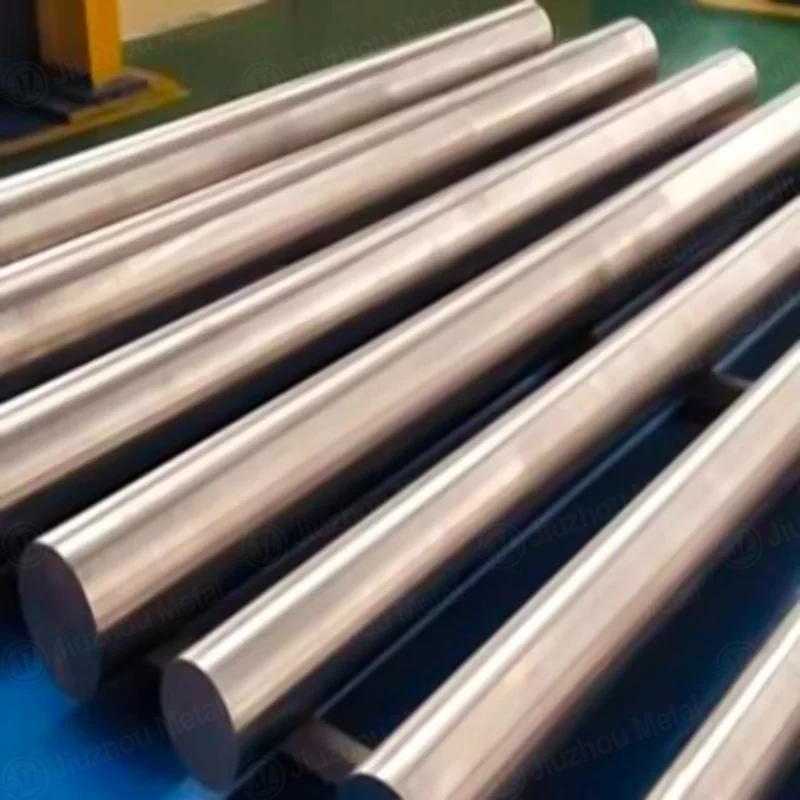
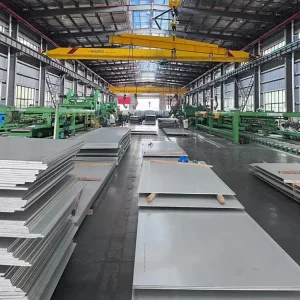
Silicon steel sheets represent the most widely used basic form for power equipment, with typical gauges from 0.2 mm to 0.35 mm.
- Motor-grade sheets balance blanking performance and magnetic flux density
- Thinner gauges are adopted for medium and high-frequency equipment to suppress eddy current loss
- Stacking factor directly determines core filling ratio and overall equipment efficiency
✅ Optimized Solution: 0.27 mm ultra-thin silicon steel sheets are recommended for variable-frequency motors.
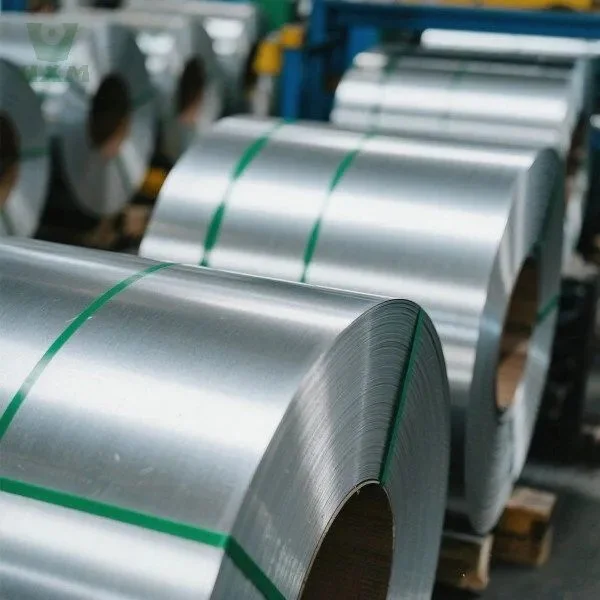
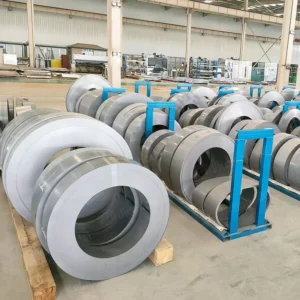
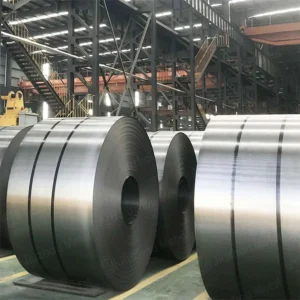
Continuously produced silicon steel strips significantly cut core manufacturing costs, especially for mass production.
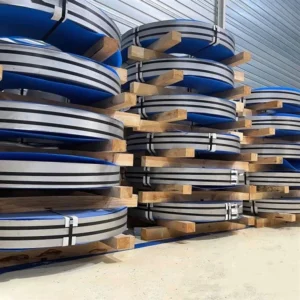
- Silicon steel coils reach widths up to 1300 mm to meet the demands of large-scale equipment
- Slit strips are directly used for stamping stator and rotor laminations
- Integrated annealing and coating processes enhance surface insulation of strips
📌 Note: Silicon steel strips treated by continuous annealing deliver more stable magnetic performance than those processed via traditional batch annealing.
III. Supporting Processing Solutions for Silicon Steel
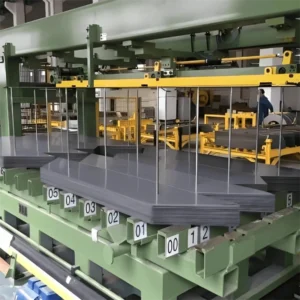
Silicon steel processing equipment must accommodate the material’s relatively high hardness and special insulating coating requirements.
- Silicon steel cutting machines deploy cemented carbide cutters to minimize burr generation
- Press tonnage is selected according to sheet thickness and die complexity
- Laser cutting fits high-precision special-shaped workpieces
⚠️ Critical Reminder: When machining grain-oriented silicon steel, the grain alignment direction must be consistent with the force-bearing direction.
IV. Key Decision-Making Points for Silicon Steel Procurement
Electrical steel selection requires balancing three core factors: magnetic performance, mechanical strength and total cost.
- Grain-oriented silicon steel is prioritized for 50 Hz power-frequency equipment
- Surface insulation resistance of electrical steel sheets shall be no less than 50 Ω·cm²
- Nanocrystalline alloys can be considered as alternative materials for high-frequency scenarios
💡 Judgement Standard: Under identical material grades, cold-rolled silicon steel delivers magnetic induction 15%–20% higher than hot-rolled counterparts.
Silicon steel scrap retains high recycling value thanks to its stable silicon content.
- Scrap shall be sorted separately by non-oriented and grain-oriented types
- Carbon pick-up must be controlled during remelting and regeneration
- Trimmings can be directly pressed into miniature magnetic cores
🔍 Circular Utilization: Approximately 980 kg of qualified molten steel can be recovered from one ton of silicon steel scrap.
Selecting silicon steel essentially involves trade-offs between electromagnetic efficiency and manufacturing cost. Material characteristics directly govern the energy efficiency class of equipment, ranging from motor rotational speed to transformer no-load loss.





 English
  Japanese
  Korean
  French
  German
  Spanish
  Portuguese
  Russian
  Arabic
  Italian
  Turkish
  Dutch
Dutch  Polish
  Swedish
  Danish
  Norwegian
  Finnish
  Greek
Greek  Hungarian
  Czech
Czech  Romanian
  Bulgarian
  Slovenian
  Croatian
  Slovak
  Malay
Malay  Indonesian
  Thai
Thai  Vietnamese
  Myanmar
  Khmer
Khmer  Lao
Lao  Tagalog
  Hindi
Hindi  Bengali
  Urdu
Urdu  Nepali
  Sinhala
  Hebrew
  Ukrainian
  Serbian
  Icelandic
  Swahili