

How Silicon Steel Became the Core Magnetic Material of Modern Industry
Szilíciumacél is a special alloy steel with a silicon content ranging from 1% to 4.5%. Boasting high magnetic permeability and low core loss, it has become an indispensable functional material for the power and electronics industries. Its distinctive magnetic properties drastically boost energy conversion efficiency. The following elaborates on its key applications across various sectors.
I. Magnetic Core Fabrication for Power Equipment
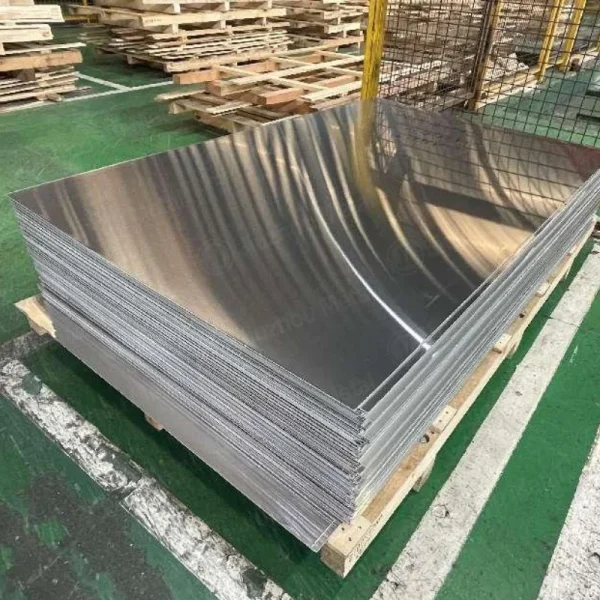
As the primary raw material for transformer cores, high-magnetic-induction szilíciumacél effectively cuts eddy current loss inside iron cores.
- Distribution transformers adopt stacked cores made of cold-rolled szilíciumacél sheets, reducing no-load loss by 40% compared with ordinary steel.
- Extra-high voltage transformers deploy grain-oriented silicon steel; aligned grain structures minimize energy loss during magnetization along a fixed direction.
🔍 Core Distinction: Grain-oriented silicon steel suits applications with unchanging magnetic circuit directions, while non-oriented silicon steel is widely used in rotating machinery.
Motor steel is massively applied to stators and rotors of electric motors and generators, delivering the following merits:
- Maintains stable magnetic permeability under high-frequency operating conditions to prevent motor overheating.
- Reduces hysteresis loss to elevate energy efficiency class, enabling industrial motors to reach IE4 efficiency standards.
- Cold-rolled non-oriented silicon steel features superior stamping performance, compatible with intricate rotor geometries.
💡 Material Selection Tip: Variable-frequency motors require low-core-loss silicon steel optimized for high-frequency loss performance.
II. Magnetic Field Optimization for Electronic Components
Electromagnets adopt laminated silicon steel structures, slashing eddy current loss by over 90% versus solid monolithic cores. For inductors:
- Closed magnetic circuit design relies on silicon steel’s high saturation magnetic flux density.
- Thin-gauge electrical steel plates suppress high-frequency harmonic loss efficiently.
- Annealing treatment further enhances initial magnetic permeability.
Nanocrystalline silicon steel composite materials are commonly selected for magnetic cores in communication devices with unique strengths:
- Core loss is merely one-fifth that of conventional materials, raising the signal-to-noise ratio for signal transmission.
- Low magnetostriction coefficient mitigates electromagnetic interference to precision circuits.
- Outstanding high-frequency performance fits scenarios such as filters for 5G base stations.

III. Electromagnetic Interference Shielding Solutions
Silicon steel is deployed in electromagnetic shielding materials to resolve two core challenges:
- Multi-layer sandwiched silicon steel structures absorb electromagnetic wave energy.
- High magnetic permeability redirects the propagation paths of magnetic fields.
Magnetic shielding chambers for medical MRI equipment operate on this principle, attenuating external magnetic field interference by over 60 dB.
IV. Energy Efficiency Upgrade for Industrial Equipment
After adopting specialized silicon steel sheets for welding machine transformers:
- Transient response speed improves by 30% for more stable arc striking.
- Temperature rise drops by 15–20 °C during continuous operation.
Thin-gauge silicon steel applied to reactors inside frequency converters reduces high-frequency harmonic loss.
For power electronic equipment, silicon steel selection requires balanced evaluation of:
- Correlation between core cross-sectional area and saturation magnetic flux density
- Matching degree between operating frequency and sheet thickness gauge
- Extent of magnetic property degradation caused by stamping processes
✅ Optimization Direction: Silicon steel thinner than 0.2 mm is recommended for medium and high-frequency equipment.
From transformers to electromagnetic shielding, silicon steel keeps driving the energy efficiency revolution by virtue of its unique magnetic characteristics. Material selection must comprehensively consider operating frequency, magnetic circuit structure and machining processes to fully unlock the material’s performance potential.




 English
  Japanese
  Korean
  French
  German
  Spanish
  Portuguese
  Russian
  Arabic
  Italian
  Turkish
  Dutch
Dutch  Polish
  Swedish
  Danish
  Norwegian
  Finnish
  Greek
Greek  Hungarian
  Czech
Czech  Romanian
  Bulgarian
  Slovenian
  Croatian
  Slovak
  Malay
Malay  Indonesian
  Thai
Thai  Vietnamese
  Myanmar
  Khmer
Khmer  Lao
Lao  Tagalog
  Hindi
Hindi  Bengali
  Urdu
Urdu  Nepali
  Sinhala
  Hebrew
  Ukrainian
  Serbian
  Icelandic
  Swahili