
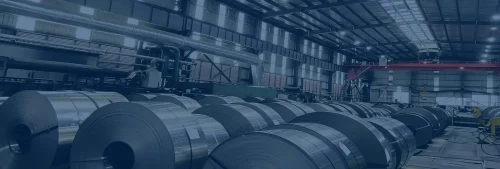
What is your Minimum Order Quantity (MOQ) for electrical steel coils?
Understanding MOQ for Electrical Steel Coils

Buyers often ask about the minimum order quantity for electrical steel coils. This question matters for planning and budgeting. However, the answer is not a single fixed number. Suppliers set MOQ based on several business factors. Therefore, you need to review each case carefully.
Why MOQ Varies by Supplier and Product
MOQ for electrical steel coils depends on the supplier’s production setup. Some mills focus on large industrial orders. Others serve smaller buyers with more flexible terms. In addition, the steel grade affects the minimum. Grain-oriented steel often has a higher MOQ than non-oriented steel. Thickness and width also play a role. A custom size may require a larger run. As a result, a standard grade might start at 5 tons. Meanwhile, a special grade could start at 20 tons or more.
Typical MOQ Ranges in the Market
In general, MOQ for electrical steel coils ranges from 1 to 25 metric tons. Small service centers may accept 1 to 5 tons. Large steel mills often ask for 20 to 25 tons per order. For trial orders, some suppliers offer lower amounts. Yet, they may charge a higher unit price. For regular contracts, the MOQ can drop over time. Thus, you should discuss your needs with the supplier directly.
Factors That Influence the Minimum Order Quantity
Several key factors shape the MOQ for electrical steel coils. First, production cost matters. Small runs raise the cost per ton. Second, inventory levels matter. If the supplier has stock, the MOQ may be lower. Third, shipping terms matter. Full container loads often require a higher MOQ. Fourth, payment terms matter. A letter of credit may allow a smaller order. Finally, the supplier’s policy on sample orders matters. Some firms welcome small trials. Others do not.
How to Negotiate a Lower MOQ
You can often negotiate a lower MOQ for electrical steel coils. Start by explaining your project scope. Then, ask for a trial order. Offer to pay a premium for the smaller quantity. Also, commit to future orders if the quality meets your needs. Another option is to combine grades in one order. This approach helps the supplier plan production. In addition, work with a trading company. They may group your order with others. As a result, you can meet the mill’s minimum.
MOQ and Total Cost Considerations
A lower MOQ does not always mean a better deal. The unit price often rises for small orders. Shipping costs may also increase per ton. Storage and handling fees can add up. Therefore, compare the total cost, not just the MOQ. For long-term projects, a higher MOQ may save money. For testing or small production, a lower MOQ makes sense. Balance your cash flow with your production schedule.
Conclusion: Value of Knowing the MOQ
Knowing the MOQ for electrical steel coils helps you plan better. It avoids surprises during procurement. It also helps you compare suppliers fairly. Remember that MOQ is a starting point for discussion. Most suppliers will work with you if you communicate clearly. Always ask for a written quote. Confirm the MOQ, price, and delivery terms. With this information, you can make a smart buying decision.







 English
  Japanese
  Korean
  French
  German
  Spanish
  Portuguese
  Russian
  Arabic
  Italian
  Turkish
  Dutch
Dutch  Polish
  Swedish
  Danish
  Norwegian
  Finnish
  Greek
Greek  Hungarian
  Czech
Czech  Romanian
  Bulgarian
  Slovenian
  Croatian
  Slovak
  Malay
Malay  Indonesian
  Thai
Thai  Vietnamese
  Myanmar
  Khmer
Khmer  Lao
Lao  Tagalog
  Hindi
Hindi  Bengali
  Urdu
Urdu  Nepali
  Sinhala
  Hebrew
  Ukrainian
  Serbian
  Icelandic
  Swahili