

How to select transformer steel with thickness of 0.23mm, 0.27mm and 0.30mm
Selecting Transformer Steel Thickness: A Practical Guide

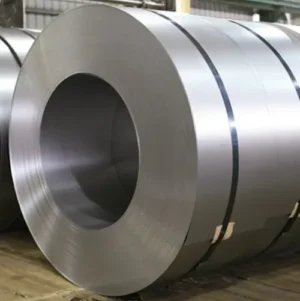
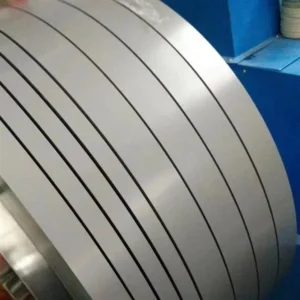
Transformer steel thickness affects core loss, cost, and mechanical fit. Engineers often choose between 0.23 mm, 0.27 mm, and 0.30 mm grades. Each option serves different frequency and power needs. This article explains how to select the right thickness for your design.
Why Thickness Matters in Transformer Cores
Thickness directly influences eddy current losses. Thinner steel reduces these losses at higher frequencies. However, thinner sheets cost more and require careful handling. Meanwhile, thicker steel offers better stacking factors. It also lowers production costs for low frequency applications. Therefore, thickness selection balances efficiency, size, and budget.
Key Factors Before You Choose
Operating frequency is the first factor. Higher frequencies demand thinner material. For example, 0.23 mm works well above 400 Hz. Next, consider flux density and core shape. Higher flux density increases loss sensitivity. Also, check the available lamination slot size. A thick sheet may not fit tight windings. Finally, review mechanical stress during assembly. Thin sheets can deform easily.
When to Use 0.23 mm Transformer Steel
Choose 0.23 mm for high frequency transformers. These include switched-mode power supplies and audio equipment. At 1 kHz, eddy losses drop significantly compared to thicker grades. Consequently, efficiency rises and heat generation falls. However, this thickness costs more per kilogram. It also needs gentle handling to avoid burrs. Use it when performance outweighs material cost.
When to Use 0.27 mm Transformer Steel
The 0.27 mm grade fits medium frequency designs. Examples are industrial control transformers and inverters. It offers a good balance between loss and cost. At 400 Hz, its performance is acceptable for many applications. Furthermore, it stacks more easily than 0.23 mm. For general purpose distribution transformers, 0.27 mm often works well. It reduces waste during cutting and punching.
When to Use 0.30 mm Transformer Steel
Select 0.30 mm for low frequency power transformers. These operate at 50 Hz or 60 Hz. At these frequencies, eddy losses remain low even with thicker sheets. As a result, you save money on raw material. Also, 0.30 mm steel resists bending during winding. It suits large distribution transformers and ballasts. However, avoid this thickness above 200 Hz. Otherwise, core loss rises sharply.
Comparing Cost and Efficiency Trade-offs
Thinner steel always improves efficiency at high frequency. But it increases material and labor costs. Thicker steel lowers cost but raises losses. Therefore, calculate total ownership cost. Consider energy savings over ten years. Also, factor in cooling requirements. For low duty cycles, thicker steel may suffice. For continuous high frequency operation, invest in 0.23 mm.
Practical Selection Steps
First, define your frequency range. Second, estimate acceptable core loss. Third, check winding window space. Fourth, test a sample core if possible. Fifth, compare quotes from steel suppliers. Always request certified loss data at your frequency. Finally, verify punchability and insulation coating. These steps prevent costly redesigns later.
Conclusion: Matching Thickness to Application
No single thickness fits every transformer. Instead, match the grade to your frequency, budget, and size limits. Use 0.23 mm for high frequency efficiency. Choose 0.27 mm for balanced medium frequency work. Pick 0.30 mm for low frequency cost savings. By following these guidelines, you optimize performance and cost. Always validate your choice with real test data before production.





 English
  Japanese
  Korean
  French
  German
  Spanish
  Portuguese
  Russian
  Arabic
  Italian
  Turkish
  Dutch
Dutch  Polish
  Swedish
  Danish
  Norwegian
  Finnish
  Greek
Greek  Hungarian
  Czech
Czech  Romanian
  Bulgarian
  Slovenian
  Croatian
  Slovak
  Malay
Malay  Indonesian
  Thai
Thai  Vietnamese
  Myanmar
  Khmer
Khmer  Lao
Lao  Tagalog
  Hindi
Hindi  Bengali
  Urdu
Urdu  Nepali
  Sinhala
  Hebrew
  Ukrainian
  Serbian
  Icelandic
  Swahili