
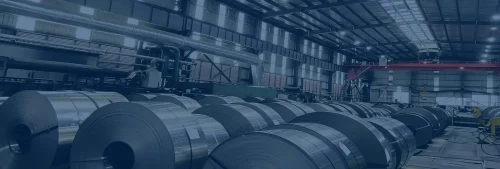
What Is Silicon Steel
I. The Origin of Silicon Steel
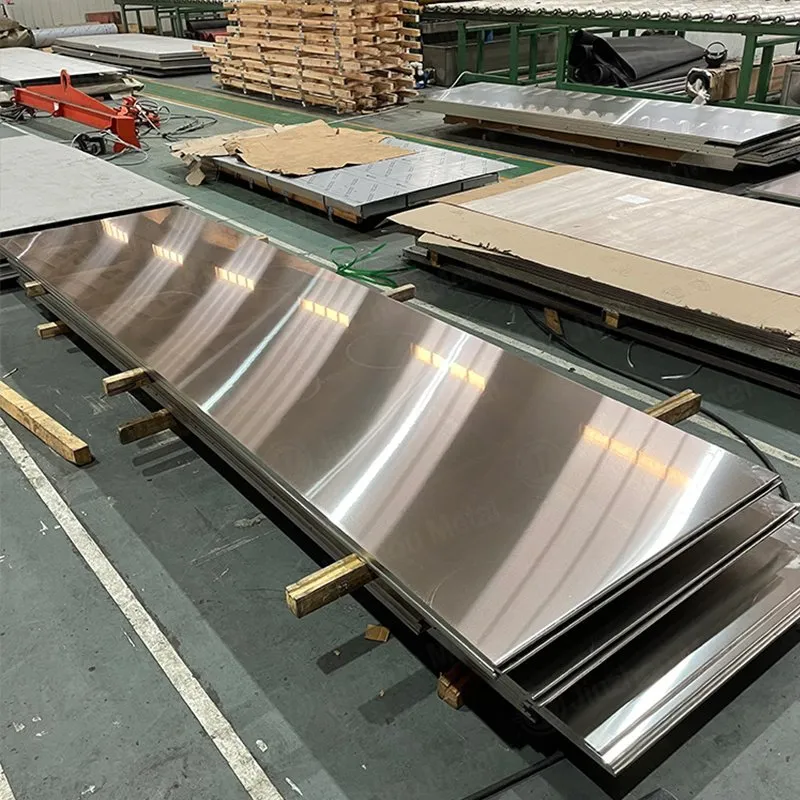
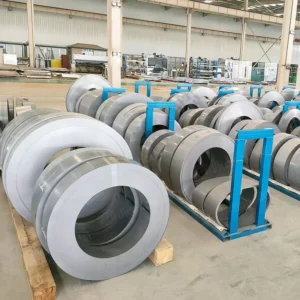
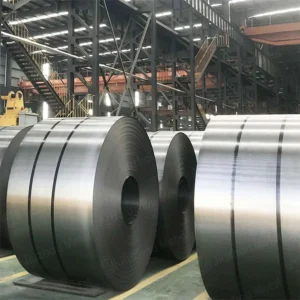
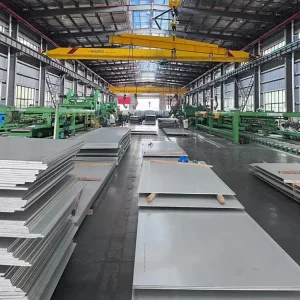
सिलिकॉन स्टील is analogous to ordinary steel infused with an “energy booster”. By adding silicon at a mass fraction of 0.5%–4.5%, the highly conductive base steel acquires extraordinary electromagnetic properties. This specially processed alloy steel usually features a light grey oxide film on its surface, with a uniquely oriented internal crystalline structure. When silicon content exceeds 2.8%, electrical resistivity rises fivefold while eddy current loss drops by 60%, thoroughly resolving the overheating issue of conventional steel exposed to alternating magnetic fields.
II. The Unsung Core Material of Power Systems
- Core of transformers: Each power transformer consumes 1 to 3 tons of सिलिकॉन स्टील laminations, whose magnetic permeability directly determines power transmission efficiency.
- Framework of motors: Ultra-thin सिलिकॉन स्टील sheets for new energy vehicle drive motors are merely 0.2 mm thick yet withstand operating temperatures up to 200 °C.
- Core of solenoid valves: Electromagnetic cores made of silicon steel in industrial automation equipment respond 30% faster than those fabricated from regular steel.
- Key to energy conservation: Premium silicon steel cuts equipment no-load loss by 15%, saving over ten thousand yuan in electricity costs annually for a single unit.

III. Evolution Trend of Next-Generation Silicon Steel
New-generation silicon steel is breaking through traditional performance limits: laser scribing technology regularizes magnetic domain alignment, nano-coatings boost corrosion resistance by 50%, and 6.5% high-silicon steel, though brittle as crackers, pushes the efficiency of high-frequency electrical appliances to new highs. Amorphous silicon steel strips developed in laboratories are only 0.025 mm thick and deliver superior soft magnetic properties, which may reshape the design of next-generation wireless charging devices.




 English
  Japanese
  Korean
  French
  German
  Spanish
  Portuguese
  Russian
  Arabic
  Italian
  Turkish
  Dutch
Dutch  Polish
  Swedish
  Danish
  Norwegian
  Finnish
  Greek
Greek  Hungarian
  Czech
Czech  Romanian
  Bulgarian
  Slovenian
  Croatian
  Slovak
  Malay
Malay  Indonesian
  Thai
Thai  Vietnamese
  Myanmar
  Khmer
Khmer  Lao
Lao  Tagalog
  Hindi
Hindi  Bengali
  Urdu
Urdu  Nepali
  Sinhala
  Hebrew
  Ukrainian
  Serbian
  Icelandic
  Swahili