
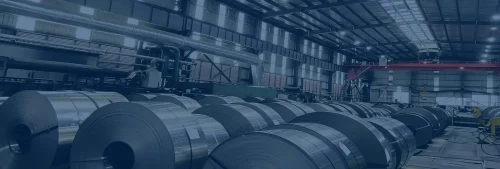
सिलिकॉन स्टील का विकास: मोटर्स के “दिल” से एक ऊर्जा-कुशल भविष्य तक
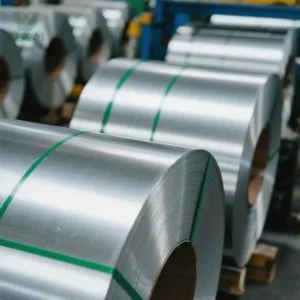
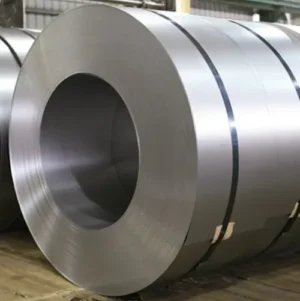
Silicon steel, scientifically known as Fe-Si soft magnetic alloy and also referred to as electrical steel, has a silicon content ranging from 0.5% to 6.5%. It resembles iron sheets as thin as cicada wings but with excellent “memory”, capable of being repeatedly magnetized in an alternating magnetic field without easily heating up. Its three trump cards – high magnetic permeability, low iron loss, and high saturation magnetic induction intensity – make it the “unique choice” for the iron cores of motors, transformers, and generators. Without it, the power grid cannot efficiently transmit every kilowatt-hour of electricity; without it, variable frequency air conditioners, new energy vehicles, and wind turbines would all “pant like a bull”.
02 A Century of Journey – Silicon Steel Technology Roadmap
2.1 ◇ Hot-rolled era: The first leap from low-carbon steel to silicon steel In 1886, Westinghouse in the United States used low-carbon steel plates with 0.4% carbon content as transformer cores, resulting in significant eddy current losses and severe magnetic aging. In 1902, Gumlich of Germany discovered that by adding a small amount of silicon, the resistivity soared, losses plummeted, and magnetic aging was reduced. Hot-rolled silicon steel thus entered the historical stage. Within just a few years, it replaced low-carbon steel and became the “mainstay” of motors and transformers.
2.2 ◇ Cold Rolling Era: The “Unique Skill” of Oriented Silicon Steel In 1933, Gauss used two rounds of cold rolling and annealing to maximize the magnetic properties of 3% Si steel along the rolling direction. In 1953, Japan’s Nippon Steel took a further step by inserting AIN+MnS dual inhibitors into cold-rolled strips. In 1964, they launched “Hi-B” high magnetic induction oriented silicon steel, which pushed Japanese electrical steel to the world’s peak. Cold-rolled non-oriented silicon steel, with its advantages of high thickness precision, smooth surface, and low magnetic anisotropy, continues to play a supporting role in small motors.
2.3 ◇ China’s trajectory: From following to paralleling. In 1952, Taiyuan Iron and Steel Plant took the lead in trial-producing hot-rolled low silicon steel. In 1974, Wuhan Iron and Steel introduced the Japanese Hi-B patent, and in 1979, domestically produced Hi-B rolled off the production line, which remains the “ballast” for domestic oriented silicon steel to this day. Nowadays, Wuhan Iron and Steel, Baosteel, and Shougang form a tripartite confrontation, with high-end oriented silicon steel being exported in bulk. Electrical steel made in China has accounted for half of the global market share.
03 Classification and Application – Understanding “Who Should Use Whom” with a Single Diagram
3.1 ◇ Low-silicon electrical steel (Si<0.5%) by silicon content: suitable for household small appliances with low electromagnetic performance requirements, featuring simple process, low cost, and almost “the same process” as plain carbon steel.
Medium silicon electrical steel (0.5%<Si<4.5%): the main material for motor and transformer cores, with multiple grades and a complex system.
High silicon electrical steel (4.5%<Si≤6.5%): “exclusive” for high-frequency motors, choke coils, and magnetic shielding. It has poor room temperature plasticity and can only be processed into thin strips through siliconizing technology at present.
3.2 ◇ Hot-rolled electrical steel categorized by production method and crystal orientation: This type has been nearly phased out and is only used for low-end laminations.
Cold-rolled non-oriented: 0.65–0.35 mm thickness, low magnetic anisotropy, high punching coefficient, widely used in various motors.
Cold-rolled single orientation (Goss): grains are easily magnetized along the rolling direction, with a deviation angle of 7° for CGO steel and B8 ≈ 1.82 T; for Hi-B steel, the deviation angle is 3°, and B8 ≈ 1.90 T. It is specifically used for large transformers and choke coils.
Cold-rolled dual orientation (cubic): a laboratory concept, not yet industrialized.
Figure 2 illustrates the global map of silicon steel applications: transformers stand out, followed closely by motors, and high-frequency devices are in the ascendant.
04 Performance indicators – iron loss and magnetic induction are “hard currency”
4.1 ◇ Iron loss P: The “heat funnel” iron loss in an alternating magnetic field = hysteresis loss Ph + eddy current loss Pe + anomalous loss Pa.
Non-oriented silicon steel: Ph accounts for the majority, and P1.5/50 is the core of assessment.
Grain-oriented silicon steel: Permeability (Pe) prevails, and P1.7/50 directly determines the temperature rise and no-load loss of transformers.
4.2 ◇ Magnetic induction intensity B: It determines how much magnetic field the iron core can accommodate. Increasing Bm can reduce the cross-sectional area of the iron core, decrease the weight of copper wire, and reduce the excitation current. For non-oriented materials, B50 (5 kA/m) is used, while for oriented materials, B8 (T) is used. The higher the value, the more “expensive” it is.
4.3 ◇ Additional requirements: The difference in iron loss between the longitudinal and transverse directions should be ≤8%, and the difference in magnetic induction should be ≤10%, ensuring consistent performance after lamination.
Only by fully optimizing the hot-rolled plate shape, cold-rolled roughness, and insulation coating quality can we produce a “dual-high” product with low iron loss and high magnetic induction.
05 Grade representation method – understand the “numerical code” at a glance
Figure 3 breaks down the grade rules for domestic non-oriented and oriented silicon steel into three lines of code: material code + serial number + application code, which is simple and easy to remember.
06 Future Direction – Thinner, Lower, More Efficient
Thin-gauge low-iron-loss non-oriented silicon steel: Cutting it by an additional 0.35 mm can reduce iron loss by another 10%, potentially increasing motor efficiency by 2–3 percentage points.
Ultra-low core loss Hi-B oriented silicon steel: Nippon Steel has been able to stably supply steel with a thickness of 0.15–0.35 mm. Japan Steel Tube Corporation has produced high-silicon thin strips using CVD siliconizing, and Chinese manufacturers are catching up.
High-silicon steel for medium and high-frequency energy-saving appliances: The “magic content” of 6.5% Si still shines and generates heat at high frequencies, and new energy vehicle motors and marine propulsion systems are becoming new battlegrounds.
Next-generation revolutionary technology: nanocrystalline, amorphous and silicon steel composites, ultra-fast cooling (USAB) + nanometer inhibitors, potentially ushering in a new era where iron loss is reduced to below P17/50.
As the power grid transitions towards being green, efficient, and distributed, every kilowatt-hour of electricity must be accounted for and conserved. Silicon steel, serving as the “brain” of motors and transformers, is addressing the most pressing question of the era from a material perspective: how to make steel smarter? The answer may lie in thinner strips, lower iron loss, and higher magnetic induction—these are the starting points for the next energy revolution.






 English
  Japanese
  Korean
  French
  German
  Spanish
  Portuguese
  Russian
  Arabic
  Italian
  Turkish
  Dutch
Dutch  Polish
  Swedish
  Danish
  Norwegian
  Finnish
  Greek
Greek  Hungarian
  Czech
Czech  Romanian
  Bulgarian
  Slovenian
  Croatian
  Slovak
  Malay
Malay  Indonesian
  Thai
Thai  Vietnamese
  Myanmar
  Khmer
Khmer  Lao
Lao  Tagalog
  Hindi
Hindi  Bengali
  Urdu
Urdu  Nepali
  Sinhala
  Hebrew
  Ukrainian
  Serbian
  Icelandic
  Swahili