
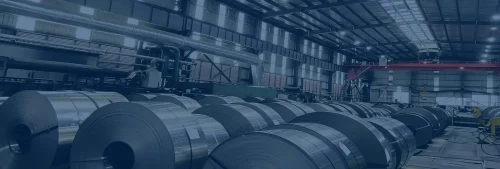
What Is Silicon Steel Sheet
Silicon steel sheet is silicon-alloyed steel plate mainly applied in electrical engineering. Its core advantage lies in outstanding electromagnetic performance: it conducts magnetic flux efficiently while cutting energy loss, making it an indispensable core material for transformers, motors and other electromagnetic equipment.
I. Material Definition
Two core indicators determine whether a steel plate qualifies as acier au silicium: silicon content and electromagnetic properties. Silicon content generally ranges from 1% to 3.5%. This range greatly improves magnetic permeability without rendering the material excessively brittle and hard. Silicon content above 3.5% drastically raises rolling difficulty, while content below 1% fails to deliver satisfactory electromagnetic performance.
Electromagnetic performance is reflected in two critical metrics: hysteresis loss and eddy current loss. Qualified acier au silicium must keep both losses under control. Hysteresis loss depends on the internal magnetic domain structure, whereas eddy current loss is closely related to sheet thickness.
Based on crystal structure and service purposes, silicon steel falls into two main categories:
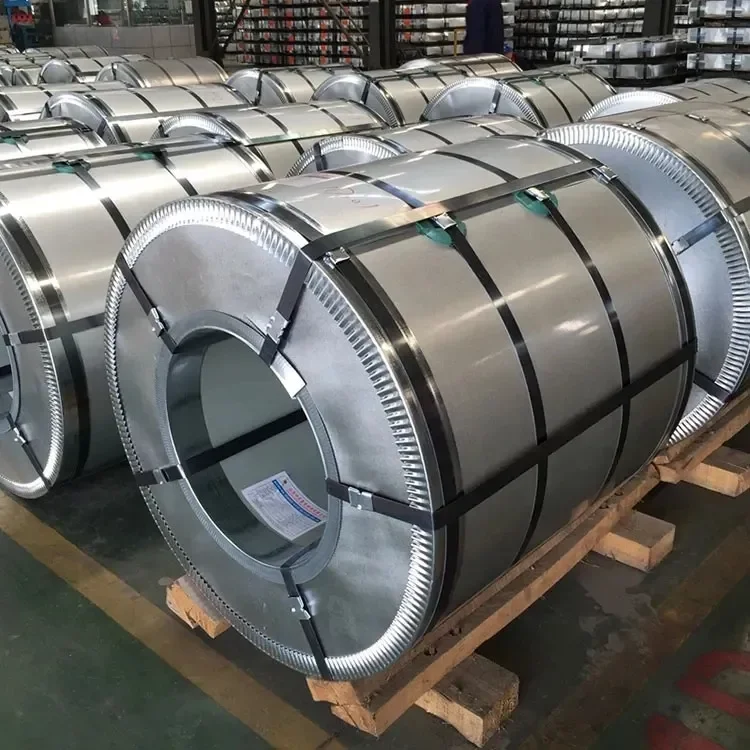
- Grain-oriented silicon steel sheet Subjected to specialized rolling and annealing, its grains align along a specific direction, resulting in directional magnetic properties. It is primarily used for transformer cores, where magnetic flux travels along a fixed path.
- Non-oriented silicon steel sheet Grains are randomly distributed, delivering uniform magnetic performance in all directions. It suits equipment such as motors, where magnetic flux direction changes constantly.
This classification is not absolute; certain custom-developed silicon steel grades sit between the two types. Nevertheless, the vast majority of industrial applications fit into these two categories.
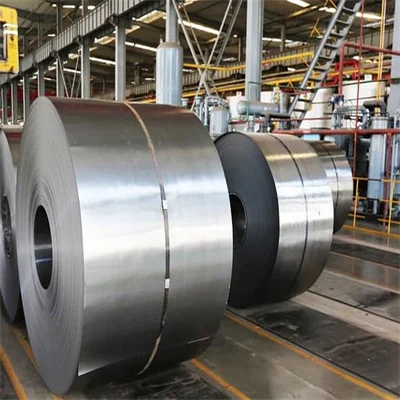
II. Key Performance Parameters
Silicon content ranks as the primary factor governing material performance. Every 0.5% increase in silicon content lifts electrical resistivity by roughly 10%, which directly suppresses eddy current loss. However, silicon content exceeding 3% demands ultra-precise rolling and process control, otherwise edge cracking and surface defects tend to occur during processing.
In mass production, motors mostly adopt medium-silicon grades with 1.5%–2.5% silicon, while transformers prefer high-silicon variants of 2.8%–3.3% silicon. These ranges are not rigid performance thresholds, but balanced trade-offs between cost and magnetic performance.
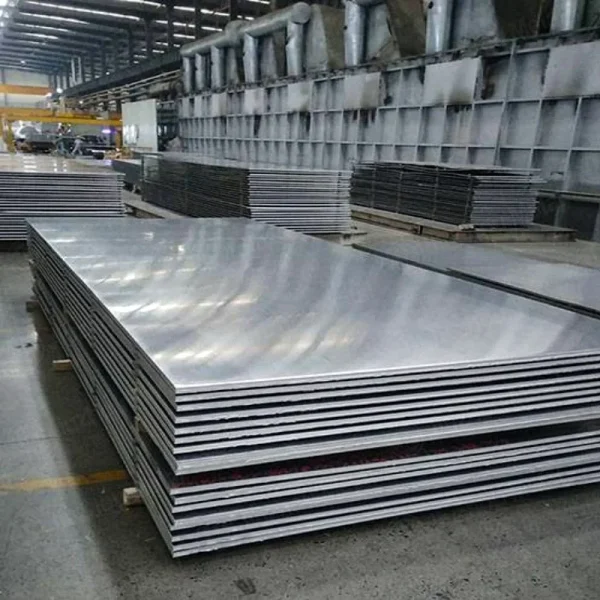
Thickness constitutes another vital variable. Within the common gauge range of 0.2 mm to 0.5 mm, every 0.1 mm reduction in thickness reduces high-frequency eddy current loss by 15%–20%. Ultra-thin gauges impose stringent requirements on rolling and heat treatment, and lower product yield drives up overall costs significantly.
For practical selection: 0.35 mm sheets are widely used for 50 Hz power-frequency equipment; 0.2 mm gauges may be adopted for high-frequency electrical appliances; large power transformers often select the compromise 0.3 mm thickness to balance cost and performance.
III. Typical Applications
Silicon steel sheets are used in nearly all electromagnetic energy conversion equipment: Grain-oriented silicon steel is the top choice for transformer cores, as magnetic flux flows unidirectionally along the rolling direction. A detailed design tip: 45° mitered joints are adopted at core corners to fully utilize directional magnetization and avoid extra loss caused by abrupt flux deflection.
Non-oriented silicon steel is standard for motors, especially variable-frequency motors with variable operating frequencies, which require consistent magnetic properties in all directions. Medium and low-grade non-oriented silicon steel is commonly stamped into stator laminations, while high-efficiency motors may specify higher-grade materials.
When selecting silicon steel, first clarify the magnetic circuit characteristics and operating frequency of target equipment, then balance performance requirements and cost limits. The division between grain-oriented and non-oriented grades, together with combinations of silicon content and thickness, all serve to match specific electromagnetic operating conditions.




 English
  Japanese
  Korean
  French
  German
  Spanish
  Portuguese
  Russian
  Arabic
  Italian
  Turkish
  Dutch
Dutch  Polish
  Swedish
  Danish
  Norwegian
  Finnish
  Greek
Greek  Hungarian
  Czech
Czech  Romanian
  Bulgarian
  Slovenian
  Croatian
  Slovak
  Malay
Malay  Indonesian
  Thai
Thai  Vietnamese
  Myanmar
  Khmer
Khmer  Lao
Lao  Tagalog
  Hindi
Hindi  Bengali
  Urdu
Urdu  Nepali
  Sinhala
  Hebrew
  Ukrainian
  Serbian
  Icelandic
  Swahili