
Does the no-load loss of transformers mainly come from transformer steel
Introduction

Transformers play a vital role in power systems. They step voltage up or down with high efficiency. Yet, even when no load connects to the secondary side, some power disappears. This wasted power is called no-load loss. Engineers often ask where this loss comes from. The answer points strongly to transformer steel. This article explores that connection in clear terms. It also explains why the steel core matters for energy savings.
What Are No-Load Losses?
No-load loss occurs when a transformer energizes but carries no load. The primary winding still draws a small current. This current is known as the excitation current. It creates a magnetic field in the core. The core then experiences two main types of loss. One is hysteresis loss. The other is eddy current loss. Together, they form the no-load loss. These losses stay constant whenever the transformer is on. They do not depend on the load size. Therefore, they run 24 hours a day. That fact makes them a key target for efficiency improvements.
Why Transformer Steel Is the Main Source
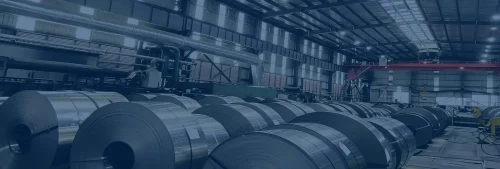
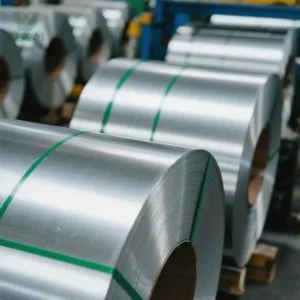
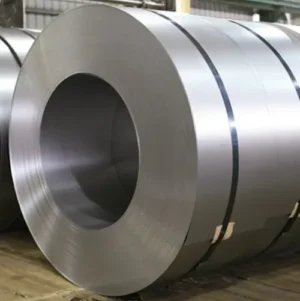
The core of most transformers uses special steel. This material is called electrical steel or acier au silicium. It contains silicon to increase resistivity. Higher resistivity reduces eddy currents. The steel also has a narrow hysteresis loop. A narrow loop means less energy wasted per cycle. However, no steel is perfect. Even the best grades still show some hysteresis. They also allow small eddy currents. As a result, the steel core becomes the primary site of no-load loss. Windings contribute very little when no load exists. So, the no-load loss mainly comes from transformer steel.
Hysteresis Loss in the Steel Core
Hysteresis loss happens as the magnetic field alternates. Each cycle forces magnetic domains to flip. Flipping domains requires energy. That energy turns into heat. The steel’s composition affects how easily domains move. Silicon steel resists domain flipping less than plain iron. Thus, it lowers hysteresis loss. But the loss never reaches zero. Thin steel sheets also help. They reduce the volume of each domain region. In practice, hysteresis loss accounts for a large share of no-load loss. This share depends on the steel grade and thickness.
Eddy Current Loss in the Steel Core
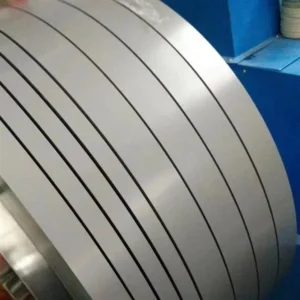
Eddy currents are circular currents inside the steel. They arise from changing magnetic flux. These currents heat the core and waste energy. Lamination of the steel reduces this loss. Laminations are thin sheets coated with insulation. The coating breaks large current paths. As a result, eddy currents stay small. Still, some eddy current loss remains. Better steel often has higher resistivity. It also uses thinner laminations. Both features cut eddy loss further. Yet, the steel core still dominates no-load loss overall.
Other Minor Factors
Some no-load loss comes from other parts. The primary winding has a small resistance. That resistance causes a tiny copper loss. Insulation materials may also absorb a bit of energy. However, these effects are minor. They do not change the main conclusion. Transformer steel remains the leading source. For this reason, core design receives close attention. Manufacturers choose steel grade, thickness, and lamination method. Each choice affects total no-load loss.
Why This Matters for Business and Energy
No-load loss runs continuously. Over a year, it adds up to real money. Utilities and factories pay for every wasted kilowatt-hour. Reducing no-load loss lowers operating costs. It also cuts carbon emissions from power generation. Better transformer steel costs more upfront. But the energy savings often justify the price. Buyers should compare no-load loss values on nameplates. Higher-quality steel usually means lower loss. That choice supports long-term sustainability goals.
How to Reduce No-Load Loss from Steel
Several practical steps can help. First, select high-grade acier au silicium. Second, use thin laminations with proper insulation. Third, apply domain refinement techniques if available. Fourth, keep the core free from mechanical stress. Stress can raise hysteresis loss. Fifth, ensure tight joints and uniform stacking. Poor joints increase local eddy currents. Finally, consider amorphous metal cores for very low loss. Amorphous steel has an even narrower hysteresis loop. It costs more but saves more energy in constant operation.
Conclusion
No-load loss in transformers mainly comes from transformer steel. Hysteresis and eddy currents in the core drive this loss. The windings and other parts add only small amounts. Therefore, improving the steel core offers the best path to efficiency. Engineers and buyers should focus on steel grade, thickness, and lamination quality. Doing so lowers energy waste and operating costs. It also supports cleaner power delivery. In short, the steel core is not just a magnetic path. It is the key to managing no-load loss.





 English
  Japanese
  Korean
  French
  German
  Spanish
  Portuguese
  Russian
  Arabic
  Italian
  Turkish
  Dutch
Dutch  Polish
  Swedish
  Danish
  Norwegian
  Finnish
  Greek
Greek  Hungarian
  Czech
Czech  Romanian
  Bulgarian
  Slovenian
  Croatian
  Slovak
  Malay
Malay  Indonesian
  Thai
Thai  Vietnamese
  Myanmar
  Khmer
Khmer  Lao
Lao  Tagalog
  Hindi
Hindi  Bengali
  Urdu
Urdu  Nepali
  Sinhala
  Hebrew
  Ukrainian
  Serbian
  Icelandic
  Swahili