
How does laser scribing reduce the core loss of transformer steel
Introduction
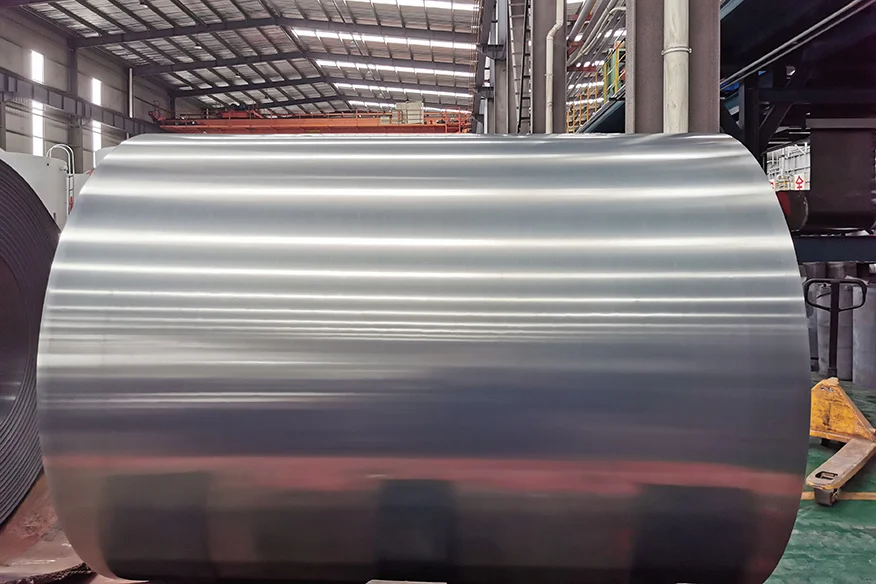
Transformer steel sits at the heart of power distribution. Even small energy losses add up over time. Engineers therefore seek ways to cut core loss without raising cost. Laser scribing has become a practical answer. This method treats the steel surface with precise light pulses. As a result, it reduces wasted heat and improves efficiency.
What Causes Core Loss in Transformer Steel
Core loss comes from two main effects. Hysteresis loss occurs as magnetic domains resist change. Eddy current loss arises from circulating electrical currents. Together, these forces turn useful energy into heat. Grain-oriented acero al silicio helps reduce both effects. Yet, its domain structure still allows some loss. Manufacturers need a final step to refine performance.
How Laser Scribing Works on the Steel Surface
A focused laser beam moves across the finished steel sheet. It does not cut through the metal. Instead, it creates shallow lines along the surface. These lines sit at a small angle to the rolling direction. The laser energy locally heats and cools the material. This action forms tiny stress zones near the surface. Consequently, the magnetic domain pattern changes in a helpful way.
The Role of Domain Refinement
Grain-oriented steel naturally has wide magnetic domains. Wide domains need more energy to flip under an alternating field. Laser scribing breaks them into narrower strips. These smaller domains move more easily. As a result, hysteresis loss drops. The scribed lines act as barriers that control domain wall motion. This refinement directly lowers the energy needed for each magnetization cycle.
Reduction of Eddy Current Loss
Eddy currents form loops within the steel core. These loops create heat and waste power. Laser scribing can increase surface resistance slightly. The treated zones disturb the path of these currents. Therefore, eddy currents become weaker. The effect is modest but useful. When combined with thin sheet thickness, the total loss falls further. This helps transformers run cooler under load.
Industrial Benefits and Process Control
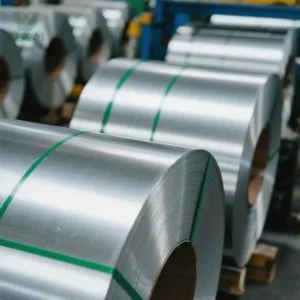
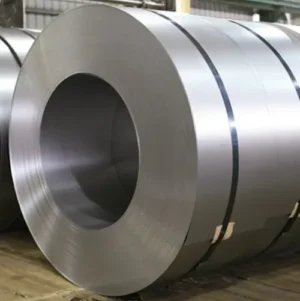
Laser scribing fits well into modern production lines. It runs at high speed without touching the steel. Operators can adjust laser power and line spacing. This control allows consistent results across large coils. The process adds little cost to the final core. In return, it improves efficiency ratings. Utilities and manufacturers both gain from lower operating losses.
Key Factors for Best Results
Several factors affect how much loss reduction occurs. Laser wavelength and pulse energy must match the steel grade. Line spacing should be fine enough to refine domains. Too much energy can damage the insulation coating. Too little energy gives no benefit. Proper tension during scribing also matters. With correct settings, core loss can drop by several percent.
Limits and Practical Notes
Laser scribing does not replace good base steel. It works best on high-quality grain-oriented material. The gain is smaller on lower grades. Also, the effect may fade after high-temperature annealing. Therefore, manufacturers often apply scribing after the final heat treatment. This order preserves the domain refinement. Field experience shows stable performance over many years.
Conclusion: A Valuable Step for Efficient Transformers
Laser scribing offers a clean way to reduce core loss. It refines magnetic domains and weakens eddy currents. The process is fast, precise, and easy to control. For transformer steel, it turns a good material into a better one. As energy demands grow, such small gains matter more. This technology helps build quieter, cooler, and more efficient power systems.






 English
  Japanese
  Korean
  French
  German
  Spanish
  Portuguese
  Russian
  Arabic
  Italian
  Turkish
  Dutch
Dutch  Polish
  Swedish
  Danish
  Norwegian
  Finnish
  Greek
Greek  Hungarian
  Czech
Czech  Romanian
  Bulgarian
  Slovenian
  Croatian
  Slovak
  Malay
Malay  Indonesian
  Thai
Thai  Vietnamese
  Myanmar
  Khmer
Khmer  Lao
Lao  Tagalog
  Hindi
Hindi  Bengali
  Urdu
Urdu  Nepali
  Sinhala
  Hebrew
  Ukrainian
  Serbian
  Icelandic
  Swahili