
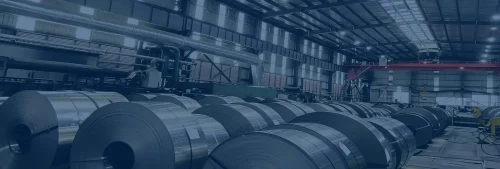
Why choose cold‑rolled silicon steel over hot‑rolled magnetic steel?
Selecting the right magnetic steel directly impacts equipment efficiency, longevity, and operational costs. Engineers and procurement managers often face a critical decision between cold-rolled silicon steel and hot-rolled magnetic steel. This choice influences core losses, permeability, and overall system reliability. Understanding the distinct advantages of cold-rolled silicon steel helps professionals make informed, cost-effective decisions for transformers, motors, and generators.
Superior Magnetic Properties for High Efficiency
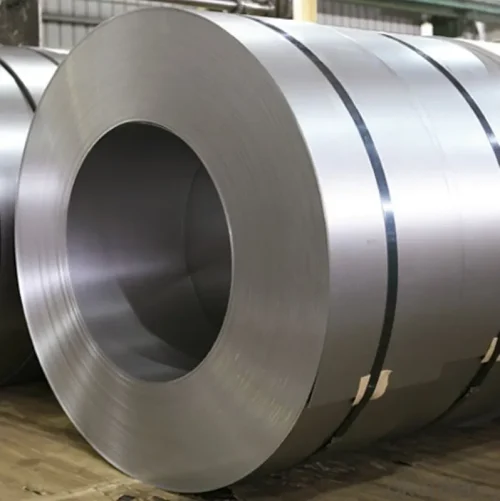
Cold-rolled silicon steel offers significantly lower core loss than hot-rolled magnetic steel. The cold rolling process aligns grain structures in the rolling direction. This alignment enhances magnetic permeability and reduces hysteresis losses. For industrial motors and servo motors, this translates to cooler operation and higher energy efficiency. Hot-rolled magnetic steel lacks this precise grain orientation. Its random crystal structure causes higher eddy current losses, especially under high-frequency conditions. Design engineers targeting IE4 or IE5 efficiency ratings consistently prefer cold-rolled silicon steel for its predictable magnetic behavior.
Tighter Thickness Tolerances Reduce Material Waste
Cold rolling enables exceptional control over strip thickness, often within ±5 microns. Hot-rolled magnetic steel typically has wider gauge variations, which complicates stacking and lamination assembly. For transformer core manufacturers, consistent thickness ensures uniform air gaps and lower assembly rejections. Procurement specialists appreciate this uniformity because it reduces scrap rates and simplifies inventory management. Moreover, thinner gauges down to 0.18 mm are feasible only with cold rolling. These ultrathin laminations are essential for high-frequency inductors and electric vehicle traction motors.
Better Surface Quality and Insulation Coating Adhesion
The cold-rolled process produces a smooth, defect-free surface that accepts insulation coatings uniformly. Hot-rolled magnetic steel often has scale, roughness, and oxide layers that impair coating bonding. Poor coating adhesion leads to inter-laminar shorts, increasing eddy current losses over time. Cold-rolled silicon steel supports advanced C5 and C6 coatings, which provide high interlayer resistance and corrosion protection. For EPC contractors in coastal or humid environments, this coating durability extends equipment service life and reduces maintenance cycles.
Lower Total Cost of Ownership Despite Higher Initial Price
Cold-rolled silicon steel commands a premium per ton compared to hot-rolled magnetic steel. However, its efficiency gains quickly offset this upfront cost. A 1% reduction in core loss can save hundreds of kilowatt-hours annually for a medium-sized distribution transformer. Over a 20-year lifespan, these energy savings far exceed the material price difference. Supply chain managers evaluating lifecycle costs find cold-rolled grades more economical for critical power infrastructure. Additionally, lighter core designs become possible due to higher flux density, reducing steel consumption per kVA rating.
Consistent Mechanical Properties for Automated Stacking
Automated lamination stacking relies on consistent flatness, edge straightness, and residual stress levels. Cold-rolled silicon steel undergoes stress-relief annealing, delivering stable hardness and ductility. Hot-rolled magnetic steel varies more in hardness and internal stress, causing jams in high-speed punch presses. Manufacturing engineers report 15-20% higher throughput when switching to cold-rolled material. This operational reliability directly benefits motor assemblers and transformer fabricators who run continuous production lines.
Superior Performance Under High Flux Density
When operating near saturation, cold-rolled silicon steel maintains higher permeability than hot-rolled alternatives. This characteristic is vital for compact transformer designs where core cross-sections are constrained. For power electronic converters and UPS systems, the linear B-H curve of cold-rolled material minimizes harmonic distortion. Hot-rolled magnetic steel saturates earlier, leading to overheating and audible noise. Acoustic performance also improves, satisfying strict noise regulations in residential or hospital installations.
Global Standards Compliance and Traceability
Leading cold-rolled silicon steel producers adhere to ASTM A876, IEC 60404, and JIS C2553 standards. These specifications include full material certificates, grain size reports, and loss curves. Hot-rolled magnetic steel often lacks such rigorous documentation, creating compliance risks for international projects. EPC firms bidding on World Bank-funded substations must provide traceable magnetic steel data. Cold-rolled variants simplify this certification process, reducing project approval delays. Procurement officers value this transparency for quality audits and warranty claims.
Reduced Aging and Long-Term Stability
Magnetic properties of hot-rolled steel degrade faster under thermal cycling and mechanical vibration. Cold-rolled silicon steel exhibits excellent aging resistance due to its refined grain structure and low impurity levels. After 100,000 hours of operation, core loss increases remain below 5% for cold-rolled grades, versus 15-20% for hot-rolled types. Reliability engineers for offshore wind farms and mining conveyors prioritize this long-term stability. It ensures predictable performance without unexpected efficiency drops over decades of service.
Easier Secondary Processing and Cutting
Shearing, punching, and laser cutting produce cleaner edges on cold-rolled silicon steel. The uniform hardness minimizes burr formation, which improves insulation between laminations. Hot-rolled steel often generates rough edges that require additional deburring steps. For high-volume production of stator and rotor cores, these extra operations add cost and cycle time. Tooling wear is also lower with cold-rolled material, extending die life by up to 30%. Maintenance supervisors note fewer unscheduled tool changes, boosting overall equipment effectiveness.
Conclusion: A Strategic Choice for Future-Ready Equipment
Cold-rolled silicon steel clearly outperforms hot-rolled magnetic steel in efficiency, consistency, and lifecycle value. For design engineers, it enables compact, quiet, and highly efficient electromagnetic devices. For procurement leaders, it aligns with sustainability goals and lowers operational expenses. While the initial investment is higher, the return on investment appears within two to three years for most grid and industrial applications. As global energy regulations tighten, specifying cold-rolled silicon steel becomes not just an option but a competitive necessity. Upgrade your material selection today to secure reliable, cost-effective, and future-proof magnetic core solutions.






 English
  Japanese
  Korean
  French
  German
  Spanish
  Portuguese
  Russian
  Arabic
  Italian