
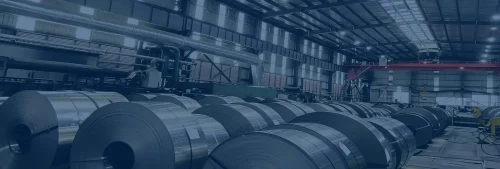
Standards for Silicon Steel Sheets
Standards governing χάλυβας πυριτίου sheets fall into three tiers: international, national and industrial, tailored to distinct application scenarios and trade demands. Familiarity with these standards facilitates rapid screening of suitable materials during procurement and application.
I. Classification and Definition of Standards
Globally accepted χάλυβας πυριτίου standards are formulated by specialized organizations such as the International Electrotechnical Commission (IEC). Their core objective is to unify test methods for magnetic performance and dimensional tolerances, enabling consistent comparison of materials manufactured across different countries. Key covered indicators include core loss, magnetic flux density and stacking factor, parameters that directly determine the energy efficiency of motors and transformers.
Domestic national standards stipulate more detailed limits on chemical composition and physical properties of χάλυβας πυριτίου. Examples include controlled ranges for carbon and silicon content, as well as temperature resistance grades for surface insulating coatings. Such specifications are generally better aligned with the actual processing capabilities of domestic manufacturers compared to international standards. Test procedures are also more practical; for instance, Epstein frame testing for core loss specifies the exact number of test samples and clamping force.
Certain industries and regions have developed refined supplementary specifications. Silicon steel for automotive motors may impose extra requirements on vibration resistance, while materials for high-frequency transformers place strict emphasis on thickness uniformity of thin gauges. These standards add application-specific test items under the framework of prevailing international or national standards.
II. Guidance for Standard Selection
Material selection shall start by identifying core requirements of the operating environment. High-temperature service conditions call for review of the Curie temperature of silicon steel, whereas precision machining requires evaluation of burr height after blanking. Non-oriented silicon steel is the preferred choice for rotating motors, while grain-oriented silicon steel delivers superior performance in transformer cores. If multiple stamping processes are involved in fabrication, verification is needed to confirm whether the material’s annealing process permits secondary forming.
The silicon steel standard system acts as a set of navigational benchmarks. Users shall first pinpoint the application scenario, then reference the corresponding performance parameter limits across different standard tiers.





 English
  Japanese
  Korean
  French
  German
  Spanish
  Portuguese
  Russian
  Arabic
  Italian
  Turkish
  Dutch
Dutch  Polish
  Swedish
  Danish
  Norwegian
  Finnish
  Greek
Greek  Hungarian
  Czech
Czech  Romanian
  Bulgarian
  Slovenian
  Croatian
  Slovak
  Malay
Malay  Indonesian
  Thai
Thai  Vietnamese
  Myanmar
  Khmer
Khmer  Lao
Lao  Tagalog
  Hindi
Hindi  Bengali
  Urdu
Urdu  Nepali
  Sinhala
  Hebrew
  Ukrainian
  Serbian
  Icelandic
  Swahili