
What grades of transformer steel are commonly used for 10kV distribution transformers
Understanding Transformer Steel for 10kV Distribution Units
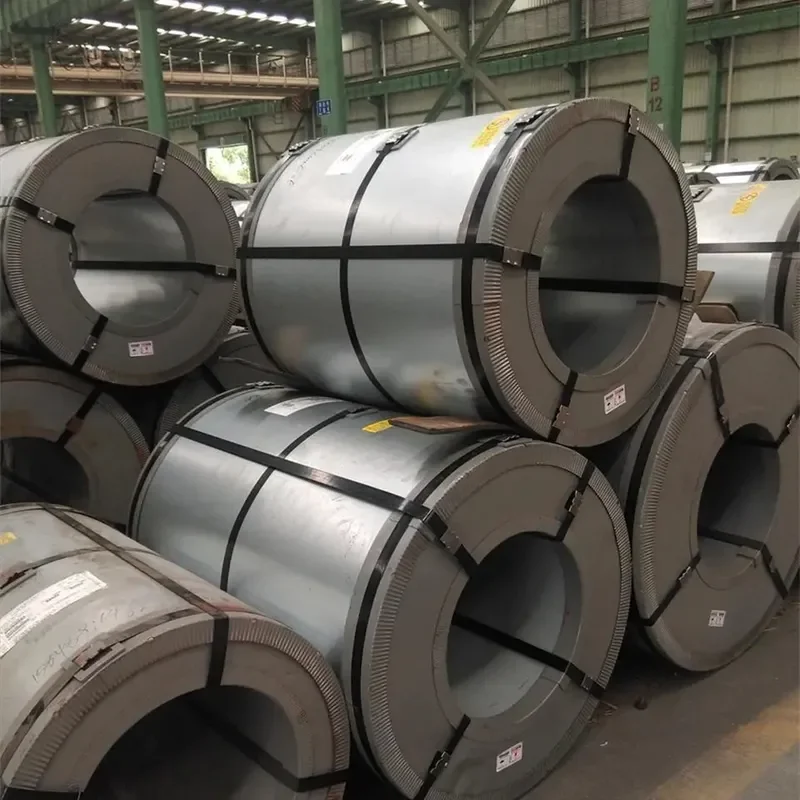
Distribution transformers operating at 10kV form the backbone of local power delivery. Their cores rely on special steel. This steel must handle magnetic fields efficiently. Therefore, choosing the right grade matters for cost and performance. Common grades fall into two main families. These are grain-oriented and non-oriented electrical steels. Each family offers distinct properties for 10kV designs.
Grain-Oriented Steel Grades for High Efficiency
Grain-oriented (GO) steel dominates many 10kV transformer cores. Its crystal structure aligns to the rolling direction. As a result, magnetic losses drop significantly. Popular grades include M-4, M-5, and M-6. These follow the older ASTM system. Modern grades use designations like 27M4, 30M5, or 35M6. The numbers show thickness in millimeters times 100. For instance, 30M5 means 0.30 mm thick. Lower thickness often reduces eddy currents. However, thinner steel raises manufacturing costs. Consequently, engineers balance loss and price. High-efficiency 10kV units often use 27M4 or 30M5. These grades cut no-load losses by 15% to 30% compared to standard options. That savings matters over decades of service.
Non-Oriented Steel Grades for Cost-Sensitive Designs
Non-oriented (NO) steel costs less than GO steel. Its magnetic properties stay uniform in all directions. Thus, it suits smaller or lightly loaded 10kV transformers. Common NO grades include 50A470, 50A600, and 65A800. The first two digits show thickness in hundredths of a millimeter. So 50A470 is 0.50 mm thick. The suffix 470 means core loss in watts per kilogram at 1.5 Tesla. Lower numbers mean better efficiency. For 10kV distribution units, 50A600 or 50A470 appears frequently. These grades work well when cost pressure outweighs peak efficiency needs. They also tolerate simple punching and slitting. That makes them friendly for high-volume production.
Key Selection Factors for 10kV Transformers
Several factors guide grade selection for 10kV units. First, consider the required efficiency standard. DOE 2016 and EU Tier 2 rules push toward GO steel. Second, review the load profile. Continuous heavy loading favors GO grades like 30M5. Intermittent or light loading may allow NO grades like 50A600. Third, check the core building method. Wound cores prefer thin GO steel. Stacked cores can use either family. Fourth, evaluate the budget. GO steel costs 20% to 40% more than NO steel. Yet, its lower losses cut operating expenses. Finally, think about noise. GO steel often runs quieter due to magnetostriction. NO steel may need extra clamping. Each factor interacts with the others. Therefore, a holistic view prevents poor choices.
Common Grade Comparisons and Typical Uses
M-4 and 27M4 serve premium 10kV transformers. They deliver the lowest core loss. Utilities often specify them for urban substations. M-5 and 30M5 balance cost and performance. They suit standard distribution poles and pads. M-6 and 35M6 fit older or rebuilt units. They offer decent efficiency at lower cost. On the NO side, 50A470 matches mid-range needs. 50A600 works for basic rural service. 65A800 appears in small dry-type units. Notably, 10kV transformers rarely use very thin grades below 0.23 mm. Such grades cost too much for this voltage class. Instead, 0.27 mm to 0.35 mm GO steel dominates. For NO steel, 0.50 mm to 0.65 mm remains standard.
Practical Tips for Buyers and Engineers
When sourcing transformer steel for 10kV units, request mill test certificates. These show actual core loss and permeability. Also, verify the grade matches the design flux density. Over-specifying wastes money. Under-specifying causes overheating. Furthermore, consider the annealing process. GO steel needs stress-relief annealing after cutting. NO steel often skips this step. That difference affects total production time. Finally, track global standards. ASTM A876 covers GO steel. ASTM A677 covers NO steel. IEC 60404-8-7 offers similar global grades. Staying current helps avoid obsolete specifications.
Conclusion: Matching Grade to Application
In summary, 10kV distribution transformers commonly use GO grades like 27M4, 30M5, and 35M6. They also use NO grades such as 50A470, 50A600, and 65A800. The best choice depends on efficiency targets, load shape, and budget. High-efficiency designs favor GO steel. Cost-sensitive designs lean toward NO steel. By understanding these grades, engineers can optimize core loss, size, and total cost. That knowledge leads to reliable, economical 10kV power delivery for decades.





 English
  Japanese
  Korean
  French
  German
  Spanish
  Portuguese
  Russian
  Arabic
  Italian
  Turkish
  Dutch
Dutch  Polish
  Swedish
  Danish
  Norwegian
  Finnish
  Greek
Greek  Hungarian
  Czech
Czech  Romanian
  Bulgarian
  Slovenian
  Croatian
  Slovak
  Malay
Malay  Indonesian
  Thai
Thai  Vietnamese
  Myanmar
  Khmer
Khmer  Lao
Lao  Tagalog
  Hindi
Hindi  Bengali
  Urdu
Urdu  Nepali
  Sinhala
  Hebrew
  Ukrainian
  Serbian
  Icelandic
  Swahili