

Differences Between Silicon Steel and Carbon Steel
I. Fundamental Differences in Composition Design
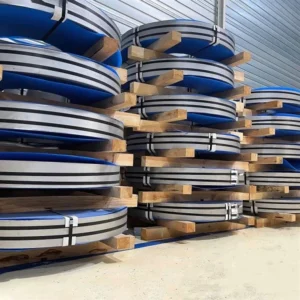
Silicon steel and carbon steel can be likened to twin siblings with completely different temperaments: they look similar yet each has exclusive strengths. Silicon steel is an alloy steel with deliberately added silicon at a mass fraction of 1%–4.5%, functioning as a special magnetic modifier for iron. Carbon steel, by contrast, is dominated by iron and carbon with carbon content ranging from 0.12% to 2%, plus occasional trace elements such as manganese and phosphorus. This compositional gap directly defines their specialized applications: Siliziumstahl is tailored for electromagnetic scenarios, while carbon steel excels at bearing mechanical loads.
II. Distinct Contrasts in Functional Performance
- Electromagnetic properties: The magnetic permeability of silicon steel is 5 to 10 times that of carbon steel, analogous to the transmission speed gap between 5G and 2G networks. Its core loss is merely one-third that of ordinary carbon steel, making it ideal core material for transformers.
- Mechanical strength: Carbon steel easily achieves tensile strength of 400–550 MPa, roughly 30% higher than silicon steel, so it is the primary choice for construction steel rebars.
- Machinability: Silicon steel suffers reduced ductility due to silicon addition and tends to crack during blanking, requiring dedicated annealing processes. Carbon steel supports a wide range of forming methods including welding and forging.

III. Separate Application Fields
Silicon steel and carbon steel are comparable to Olympic athletes competing in different events. Silicon steel dominates the power industry for transformer and motor cores, whereas carbon steel prevails in construction for steel structures and mechanical components. An interesting combined application is seen in new energy vehicle traction motors: silicon steel undertakes high-efficiency electromagnetic conversion, while carbon steel components provide structural support. This matching combination can boost motor efficiency by over 15%.





 English
  Japanese
  Korean
  French
  German
  Spanish
  Portuguese
  Russian
  Arabic
  Italian
  Turkish
  Dutch
Dutch  Polish
  Swedish
  Danish
  Norwegian
  Finnish
  Greek
Greek  Hungarian
  Czech
Czech  Romanian
  Bulgarian
  Slovenian
  Croatian
  Slovak
  Malay
Malay  Indonesian
  Thai
Thai  Vietnamese
  Myanmar
  Khmer
Khmer  Lao
Lao  Tagalog
  Hindi
Hindi  Bengali
  Urdu
Urdu  Nepali
  Sinhala
  Hebrew
  Ukrainian
  Serbian
  Icelandic
  Swahili