

Why staggered overlapping of transformer steel laminations is essential
Transformer cores face a hidden threat. That threat comes from tiny gaps between steel sheets. These gaps allow magnetic flux to leak. As a result, energy wastes as heat. Engineers solve this problem with a simple but vital method. That method is staggered overlapping of transformer steel laminations. This technique keeps the core efficient and reliable. Understanding why it matters helps anyone working with power systems.
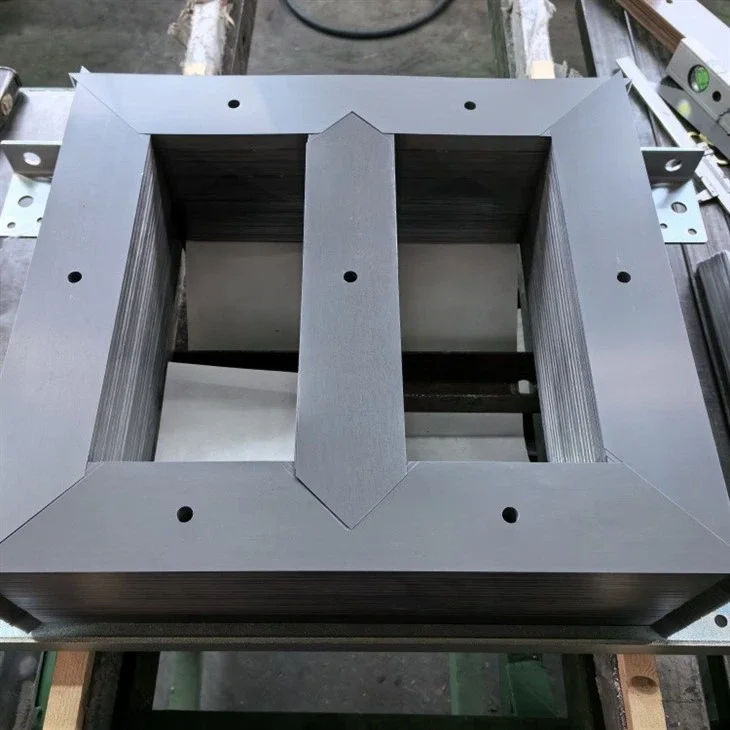
The Core Problem With Simple Stacking
A transformer core uses many thin steel sheets. Each sheet is called a lamination. If you stack them perfectly aligned, tiny air gaps appear. These gaps run straight through the core. Magnetic flux prefers steel over air. So, flux jumps across those gaps with difficulty. This jumping causes eddy currents and losses. Over time, heat builds up inside the core. Efficiency drops, and the transformer may fail early. Therefore, a smarter stacking approach becomes necessary.
How Staggered Overlapping Works
The solution is to offset each layer slightly. Instead of lining up edges, you shift them. Then, the next layer shifts in the opposite direction. This creates a staggered overlapping pattern. As a result, gaps in one layer sit over solid steel in the next. Flux finds a continuous path through the core. It does not need to jump across air. Consequently, magnetic resistance falls sharply. Energy loss drops, and the core runs cooler.
Why This Method Reduces Eddy Currents
Eddy currents are circular electric flows. They arise when magnetic flux changes. In a solid core, these currents grow large. They waste power as heat. Laminations already break the core into thin slices. That step limits eddy currents. However, staggered overlapping goes further. It interrupts any straight path for those currents. The offset joints force eddy currents into smaller loops. Smaller loops mean less wasted energy. Thus, the transformer operates more efficiently.
Mechanical Stability And Noise Control
A transformer core must hold together under stress. Vibration and noise come from magnetic forces. These forces make loose laminations rattle. Staggered overlapping creates a interlocking effect. Each layer supports its neighbors. The core becomes a stiffer unit. This reduces movement and sound. In addition, the overlap prevents sheets from shifting during operation. So, the transformer stays quiet and stable over many years.
Manufacturing And Cost Benefits
Building a core with staggered overlapping requires care. Workers or machines must offset each sheet. Yet, this extra step pays off. The core uses less steel for the same performance. It also produces less heat. That means smaller cooling systems. Over the transformer’s life, energy savings add up. For businesses, these savings lower operating costs. For utilities, they improve grid reliability. Therefore, the method offers strong economic value.
Common Mistakes To Avoid
Not every offset pattern works well. Random shifting can create new gaps. Too much overlap wastes material. Too little overlap leaves flux paths broken. Engineers must follow precise designs. They also need clean, flat laminations. Burrs or dirt increase losses. So, quality control matters at every step. When done right, staggered overlapping delivers consistent results.
Real-World Applications
This technique appears in many transformer types. Power distribution transformers use it daily. Audio transformers rely on it for clear sound. High-frequency transformers in electronics need it too. Even small chargers benefit from laminated cores. In each case, staggered overlapping keeps losses low. It helps devices meet efficiency standards. As energy rules tighten, this method becomes more important.
Conclusion: A Small Shift With Big Impact
Staggered overlapping of transformer steel laminations is not a minor detail. It directly controls core loss, heat, and noise. By offsetting each layer, engineers create a better magnetic path. This path reduces eddy currents and boosts efficiency. The core lasts longer and uses less energy. For anyone designing or buying transformers, this knowledge matters. A small shift in assembly leads to major gains in performance. That is why this practice remains essential in modern electrical engineering.







 English
  Japanese
  Korean
  French
  German
  Spanish
  Portuguese
  Russian
  Arabic
  Italian
  Turkish
  Dutch
Dutch  Polish
  Swedish
  Danish
  Norwegian
  Finnish
  Greek
Greek  Hungarian
  Czech
Czech  Romanian
  Bulgarian
  Slovenian
  Croatian
  Slovak
  Malay
Malay  Indonesian
  Thai
Thai  Vietnamese
  Myanmar
  Khmer
Khmer  Lao
Lao  Tagalog
  Hindi
Hindi  Bengali
  Urdu
Urdu  Nepali
  Sinhala
  Hebrew
  Ukrainian
  Serbian
  Icelandic
  Swahili