
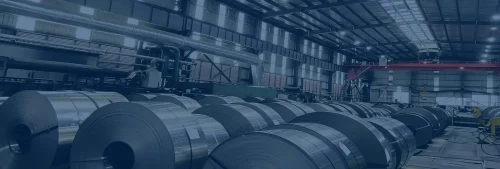
What Performance Degradation of Transformers Will Be Triggered by Magnetic Aging of Electrical Steel
Magnetic aging is a natural performance attenuation phenomenon of electrical steel after long-term operation. It will gradually reduce the comprehensive performance of transformer equipment.
Magnetic aging firstly causes continuous rise of transformer no-load loss. Internal magnetic domain stability of aging steel decreases. Hysteresis loss increases year by year. Long-term accumulated energy consumption rises obviously.
It reduces core magnetic induction and anti-saturation ability. Aging changes microscopic grain structure. The maximum magnetic flux bearing capacity declines. Transformers are more prone to magnetic saturation under peak load.
It aggravates transformer operating temperature rise. Increased loss converts into more heat. Long-term slight overheating accelerates insulation aging. It shortens the overall service life of equipment.
It increases transformer operating noise and vibration. Aging steel has unbalanced magnetic domain movement. Magnetostriction vibration intensifies. Equipment noise becomes louder with service time.
It leads to unstable power supply performance. Aging-induced loss fluctuation causes unbalanced magnetic flux. Transformer output voltage waveform distorts slightly. It affects power supply stability.

High-quality anti-aging electrical steel can slow down this process. HiB laser scribed steel has purer internal structure. Its magnetic aging speed is far lower than ordinary CGO steel.
Regular equipment maintenance delays aging deterioration. Timely heat dissipation and dust removal stabilize core working environment. It reduces magnetic performance attenuation rate.
In conclusion, electrical steel magnetic aging causes multi-dimensional transformer performance degradation. Selecting high-grade steel and daily maintenance effectively control aging risks.




 English
  Japanese
  Korean
  French
  German
  Spanish
  Portuguese
  Russian
  Arabic
  Italian
  Turkish
  Dutch
Dutch  Polish
  Swedish
  Danish
  Norwegian
  Finnish
  Greek
Greek  Hungarian
  Czech
Czech  Romanian
  Bulgarian
  Slovenian
  Croatian
  Slovak
  Malay
Malay  Indonesian
  Thai
Thai  Vietnamese
  Myanmar
  Khmer
Khmer  Lao
Lao  Tagalog
  Hindi
Hindi  Bengali
  Urdu
Urdu  Nepali
  Sinhala
  Hebrew
  Ukrainian
  Serbian
  Icelandic
  Swahili