

What are the thicknesses of 27-gauge and 30-gauge transformer steel respectively
Transformer steel, often called electrical steel, plays a vital role in motors and transformers. Its thickness directly affects magnetic performance and energy losses. Buyers frequently ask about specific gauges. A common question is: what are the thicknesses of 27-gauge and 30-gauge transformer steel respectively? This article answers that question clearly. It also explains why gauge matters for your application.
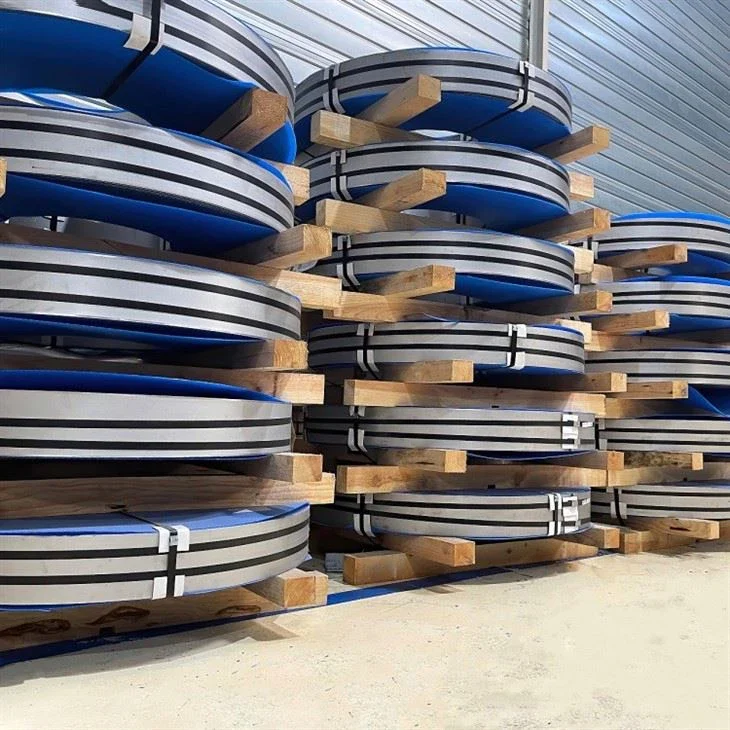
Understanding Gauge Systems for Transformer Steel
Gauge numbers come from a standard system. This system originated in the United States. It is known as the American Wire Gauge or AWG. However, transformer steel does not always follow AWG exactly. Many suppliers use the Manufacturer’s Standard Gauge for sheet steel. Therefore, you must confirm the standard with your supplier. For 27-gauge and 30-gauge transformer steel, the thicknesses are well established. They are measured in inches or millimeters. These values help engineers design efficient cores.
Thickness of 27-Gauge Transformer Steel
In the Manufacturer’s Standard Gauge, 27-gauge steel measures 0.0170 inches. This equals approximately 0.432 millimeters. Some sources list 0.0172 inches for this gauge. The small difference comes from rounding or specific mill tolerances. For transformer steel, 27-gauge is a common choice. It balances cost and performance well. Thinner steel reduces eddy current losses. However, it also raises production costs. Thus, 27-gauge suits many medium-frequency transformers. It also works in small motors and ballasts. Always verify the actual thickness from your steel supplier.
Thickness of 30-Gauge Transformer Steel
For 30-gauge transformer steel, the standard thickness is 0.0120 inches. This converts to about 0.305 millimeters. Again, minor variations exist. Some tables show 0.0125 inches for 30-gauge. The exact value depends on the mill and the specific alloy. A 30-gauge sheet is thinner than 27-gauge. This thinner profile lowers core loss at higher frequencies. Consequently, 30-gauge steel is popular in high-efficiency transformers. It also appears in precision instruments and audio equipment. Yet, thinner steel can be harder to handle. It may require careful stacking and insulation.
Why These Thicknesses Matter for Transformer Performance
Thickness influences two main types of loss. The first is hysteresis loss. The second is eddy current loss. Eddy currents flow within the steel’s cross-section. Thinner steel restricts these currents. As a result, 30-gauge steel reduces eddy losses more than 27-gauge. However, thinner steel often has lower magnetic permeability. It may also saturate at a lower flux density. Therefore, designers must trade off efficiency and size. A 27-gauge core may need fewer laminations. A 30-gauge core may need more layers. Each choice affects weight, cost, and heat generation. For this reason, the question of thickness is not trivial. It shapes the entire transformer design.
Practical Considerations for Buyers and Engineers
When you specify 27-gauge or 30-gauge transformer steel, state the standard. Do not assume the gauge number alone is enough. Ask for a mill certificate. That document shows the actual thickness in inches and millimeters. Also consider the coating type. Insulative coatings add a small amount to the total thickness. They also prevent inter-laminar shorts. Furthermore, temperature changes can alter dimensions slightly. So, leave room for tolerances in your design. Finally, remember that 27-gauge and 30-gauge are not interchangeable without testing. Always prototype your core before mass production.
Conclusion: Key Thickness Values and Their Value
In summary, 27-gauge transformer steel is about 0.0170 inches or 0.432 millimeters thick. Meanwhile, 30-gauge transformer steel is about 0.0120 inches or 0.305 millimeters thick. These values come from the Manufacturer’s Standard Gauge. They may vary slightly by supplier and standard. Understanding these thicknesses helps you select the right steel. It also helps you predict core loss and building factor. For any transformer project, confirm the gauge standard first. Then request a sample and test its magnetic properties. This careful approach saves time and money. It also ensures your final product meets efficiency goals. With the right thickness, your transformer will run cooler and last longer.






 English
  Japanese
  Korean
  French
  German
  Spanish
  Portuguese
  Russian
  Arabic
  Italian
  Turkish
  Dutch
Dutch  Polish
  Swedish
  Danish
  Norwegian
  Finnish
  Greek
Greek  Hungarian
  Czech
Czech  Romanian
  Bulgarian
  Slovenian
  Croatian
  Slovak
  Malay
Malay  Indonesian
  Thai
Thai  Vietnamese
  Myanmar
  Khmer
Khmer  Lao
Lao  Tagalog
  Hindi
Hindi  Bengali
  Urdu
Urdu  Nepali
  Sinhala
  Hebrew
  Ukrainian
  Serbian
  Icelandic
  Swahili