
Does higher silicon content always reduce the core loss of transformer steel
Does Higher Silicon Content Always Reduce Core Loss of Transformer Steel?
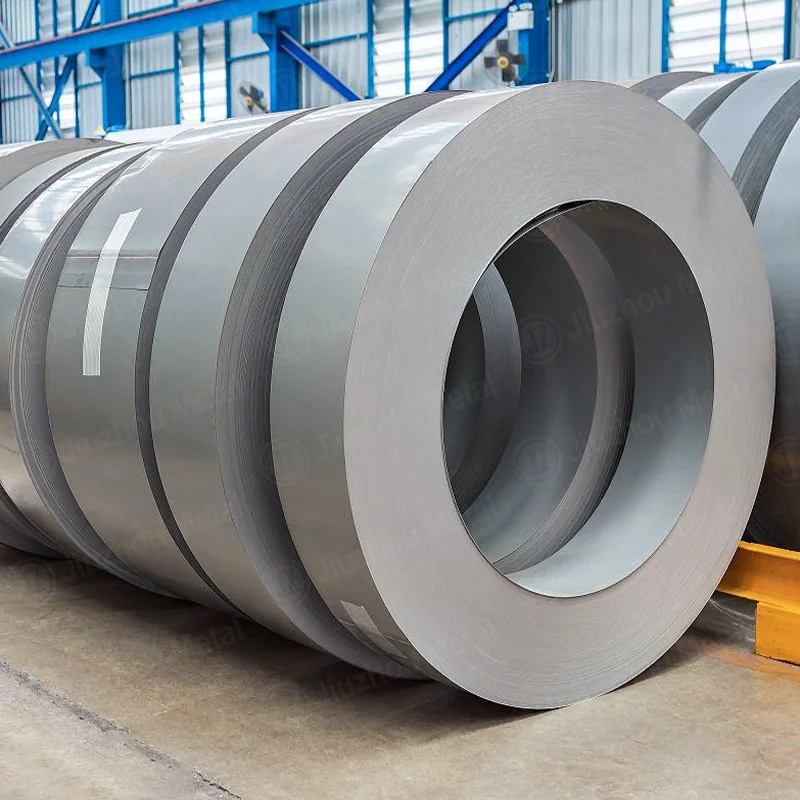
Transformer steel sits at the heart of power grids. Its core loss directly affects energy efficiency. Engineers often add silicon to reduce this loss. However, the relationship is not simple. Higher silicon content does not always guarantee lower core loss.
The Basic Role of Silicon in Transformer Steel
Silicon increases electrical resistivity in steel. This reduces eddy current losses. As a result, core loss drops in many common cases. For decades, manufacturers have used around 3% silicon. This level offers a good balance for grain-oriented steel. Yet, pushing silicon higher creates new problems. Those problems can limit further loss reduction.
Why Very High Silicon Content Causes Issues
When silicon exceeds roughly 4%, the steel becomes brittle. Cold rolling and punching become difficult. Cracks may form during processing. Such defects raise manufacturing costs and waste. Moreover, high silicon can harm magnetic permeability. Lower permeability means the core needs more turns or larger size. That change increases copper loss in windings. Therefore, total loss may rise even if core loss falls slightly.
The Influence of Processing and Impurities
Core loss depends on many factors beyond silicon. Grain orientation plays a major role. Proper cold rolling and annealing can lower loss more than extra silicon. Impurities like carbon and sulfur also hurt magnetic properties. If those elements remain high, adding silicon gives little benefit. In addition, surface coatings and stress relief affect final performance. So, silicon alone cannot solve every loss problem.
Practical Limits in Commercial Production
Most commercial transformer steels contain 2.5% to 3.5% silicon. Going above 4% is rare for mass production. Some specialty alloys reach 6.5% silicon. But they require costly processes like rapid quenching. Those methods suit small, high-frequency devices. They do not fit large power transformers well. For standard grid transformers, higher silicon often brings more harm than good.
When Higher Silicon Does Help
In certain high-frequency applications, higher silicon can reduce core loss. For example, some inductors and motors use 6.5% siliciumstål. At high frequencies, eddy currents dominate. The extra resistivity from silicon provides clear gains. However, those gains come with trade-offs in strength and cost. The design must justify those trade-offs. Thus, the benefit is conditional, not universal.
A Balanced View for Engineers
Engineers should not assume that more silicon always means lower core loss. Instead, they must consider the full magnetic circuit. Frequency, flux density, and temperature all matter. Manufacturing limits and mechanical stress also play roles. A modest silicon level with excellent grain texture often beats a high-silicon alloy with poor texture. Testing and simulation remain essential before choosing a material.
Conclusion: Silicon Is Only One Factor
Higher silicon content does not always reduce core loss in transformer steel. It helps up to a point, then creates new losses and production challenges. The best choice depends on application, frequency, and processing quality. A balanced design that respects material limits will deliver the lowest total loss. Engineers who look beyond silicon alone will find the most efficient and reliable solution.




 English
  Japanese
  Korean
  French
  German
  Spanish
  Portuguese
  Russian
  Arabic
  Italian
  Turkish
  Dutch
Dutch  Polish
  Swedish
  Danish
  Norwegian
  Finnish
  Greek
Greek  Hungarian
  Czech
Czech  Romanian
  Bulgarian
  Slovenian
  Croatian
  Slovak
  Malay
Malay  Indonesian
  Thai
Thai  Vietnamese
  Myanmar
  Khmer
Khmer  Lao
Lao  Tagalog
  Hindi
Hindi  Bengali
  Urdu
Urdu  Nepali
  Sinhala
  Hebrew
  Ukrainian
  Serbian
  Icelandic
  Swahili