

Requirements on Grain Orientation Precision of Electrical Steel for Large Power Transformer Cores
Large power transformers undertake core power transmission tasks of power grids. They put forward ultra-high precision requirements on electrical steel grain orientation.
Large transformers require extremely high grain orientation consistency. Steel grain deflection angle must be controlled within a tiny range. Excessive grain deviation increases local magnetic resistance. It causes unbalanced core loss distribution.
High orientation precision ensures uniform magnetic flux transmission. Large core structures have long magnetic circuits. Slight orientation error accumulates obvious performance loss. Precise grain arrangement guarantees smooth magnetic circulation.
It restrains local overheating of large transformer cores. Unbalanced grain orientation leads to partial high loss areas. These areas form long-term hot spots. High-precision orientation eliminates hot spot risks.
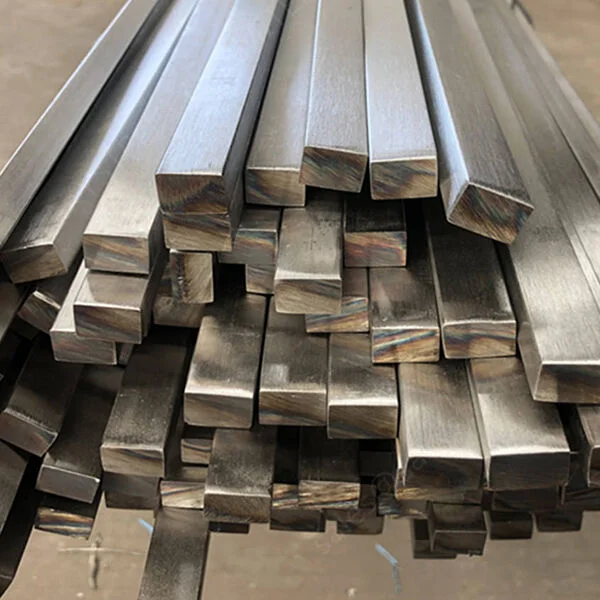
It improves the overall anti-saturation ability of equipment. Regular grain texture enhances magnetic induction stability. Large transformers bear complex load fluctuations. Precise orientation maintains linear magnetization performance.
It reduces overall operating noise of large power equipment. Ordered grain arrangement weakens magnetostriction differences. The whole core vibrates uniformly. No local resonance noise occurs.
Large power transformers exclusively adopt high-precision HiB oriented steel. Ordinary CGO steel has insufficient orientation precision. It cannot meet long-term stable operation needs of grid main transformers.
Strict orientation detection is essential before steel use. Factories detect grain texture and deflection angle one by one. Unqualified steel is prohibited from large core assembly.
To sum up, grain orientation precision determines the operation reliability of large power transformers. High-precision electrical steel is the basic guarantee for grid main equipment safety.





 English
  Japanese
  Korean
  French
  German
  Spanish
  Portuguese
  Russian
  Arabic
  Italian
  Turkish
  Dutch
Dutch  Polish
  Swedish
  Danish
  Norwegian
  Finnish
  Greek
Greek  Hungarian
  Czech
Czech  Romanian
  Bulgarian
  Slovenian
  Croatian
  Slovak
  Malay
Malay  Indonesian
  Thai
Thai  Vietnamese
  Myanmar
  Khmer
Khmer  Lao
Lao  Tagalog
  Hindi
Hindi  Bengali
  Urdu
Urdu  Nepali
  Sinhala
  Hebrew
  Ukrainian
  Serbian
  Icelandic
  Swahili