

Is thin-gauge 0.23mm transformer steel more suitable for high-precision cores
Introduction
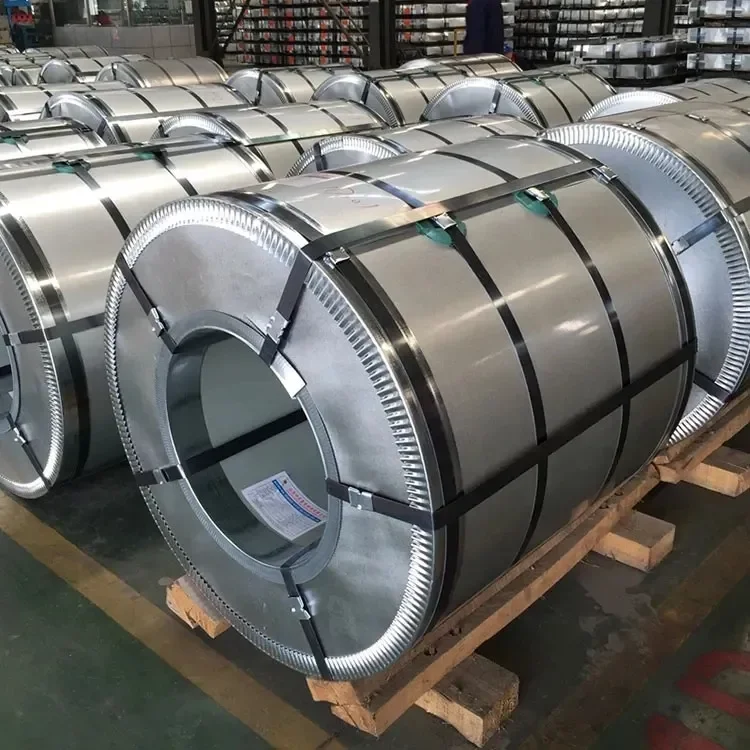
Transformer steel plays a key role in power conversion. Its thickness affects core performance and efficiency. Engineers often debate whether thinner material offers real advantages. One common question asks if thin-gauge 0.23mm transformer steel is more suitable for high-precision cores. This article examines that question with practical evidence. It also reviews trade-offs that matter for real projects.
What Thin-Gauge 0.23mm Steel Means
Gauge refers to the metal sheet thickness. Here, 0.23mm is quite thin compared to standard 0.35mm or 0.50mm grades. Thinner steel reduces eddy current losses. These losses happen when magnetic fields change inside the core. Lower losses mean less heat and higher efficiency. For that reason, thin-gauge 0.23mm transformer steel attracts designers who target low loss. However, thin material also brings handling and cost challenges.
Why High-Precision Cores Need Thin Steel
High-precision cores require tight magnetic behavior. They often work at higher frequencies or in compact spaces. At high frequency, eddy currents grow stronger in thicker steel. As a result, thin-gauge 0.23mm transformer steel limits those currents. It also supports sharper response and lower distortion. Consequently, audio, instrument, and switching cores may benefit. Yet precision also depends on punching quality and stacking accuracy.
Loss Reduction and Efficiency Gains
Eddy current loss drops as thickness decreases. Moving from 0.35mm to 0.23mm can cut that loss by roughly half. This gain matters in continuous operation. Lower loss means lower temperature rise. In turn, the core can run cooler and last longer. For high-precision cores, stable temperature supports stable inductance. Thus, thin-gauge 0.23mm transformer steel can improve long-term reliability. Still, the total loss includes hysteresis, so gains vary by grade.
Magnetic Permeability and Signal Quality
High-precision cores need consistent permeability. Thin steel can reach high permeability when properly annealed. It also responds well to weak magnetic fields. This behavior helps sensors and precision transformers. As a result, signal distortion stays low. However, thin laminations may saturate faster in some designs. Designers must match core size and turn count to the application. Therefore, thin-gauge 0.23mm transformer steel is not a universal answer.
Mechanical and Manufacturing Considerations
Thin steel is harder to handle during production. It can bend, wrinkle, or burr more easily. Poor stacking reduces the effective core area. That problem can cancel the benefits of low loss. In addition, thin-gauge 0.23mm transformer steel often costs more per kilogram. Tooling wear also rises because more cuts are needed. For high-precision cores, though, tight tolerances are normal. So the extra care may fit existing quality systems.
Frequency and Application Fit
At 50Hz or 60Hz, standard thickness often works well. At higher frequencies, thin-gauge 0.23mm transformer steel becomes more attractive. Switching power supplies, inverters, and audio transformers often operate above line frequency. In those cases, thin steel reduces loss and heat. For low-frequency power cores, the gain may be small. Thus, suitability depends on the operating frequency and duty cycle.
Cost Versus Performance Trade-Off
Every design balances cost and performance. Thin-gauge 0.23mm transformer steel raises material and labor costs. It also demands better dies and cleaner stacking. Yet it can lower energy loss over years of use. For high-precision cores, that trade-off may pay off. In mass-produced low-cost cores, it may not. Therefore, engineers should compare total cost of ownership, not just purchase price.
When Thin-Gauge 0.23mm Steel Is More Suitable
Several conditions favor thin-gauge 0.23mm transformer steel. The core must run at high frequency or low loss. Space and weight may be tight. Temperature rise must stay low. Signal quality must remain high. Under these conditions, thin steel often outperforms thicker options. It supports high-precision cores with stable magnetic properties. Consequently, the answer is yes for many advanced applications.
When It May Not Be the Best Choice
Other cases call for thicker steel. Low-frequency, cost-driven cores rarely need 0.23mm. Rugged industrial cores may tolerate higher loss. Simple designs may not justify the extra expense. In addition, poor manufacturing can ruin thin steel benefits. So thin-gauge 0.23mm transformer steel is suitable only when the process supports it. A careful review of goals and constraints remains essential.
Závěr
Thin-gauge 0.23mm transformer steel offers clear advantages for high-precision cores. It lowers eddy current loss and supports stable magnetic behavior. It also helps manage heat and signal quality. However, it brings higher cost and tighter production demands. The best choice depends on frequency, precision needs, and total cost. When those factors align, thin-gauge 0.23mm transformer steel is indeed more suitable. When they do not, a thicker grade may serve better.





 English
  Japanese
  Korean
  French
  German
  Spanish
  Portuguese
  Russian
  Arabic
  Italian
  Turkish
  Dutch
Dutch  Polish
  Swedish
  Danish
  Norwegian
  Finnish
  Greek
Greek  Hungarian
  Czech
Czech  Romanian
  Bulgarian
  Slovenian
  Croatian
  Slovak
  Malay
Malay  Indonesian
  Thai
Thai  Vietnamese
  Myanmar
  Khmer
Khmer  Lao
Lao  Tagalog
  Hindi
Hindi  Bengali
  Urdu
Urdu  Nepali
  Sinhala
  Hebrew
  Ukrainian
  Serbian
  Icelandic
  Swahili