
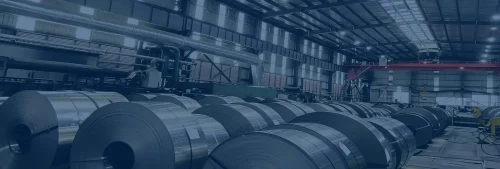
What grades of transformer steel correspond to loss grades S13 and S20
What Grades of Transformer Steel Correspond to Loss Grades S13 and S20
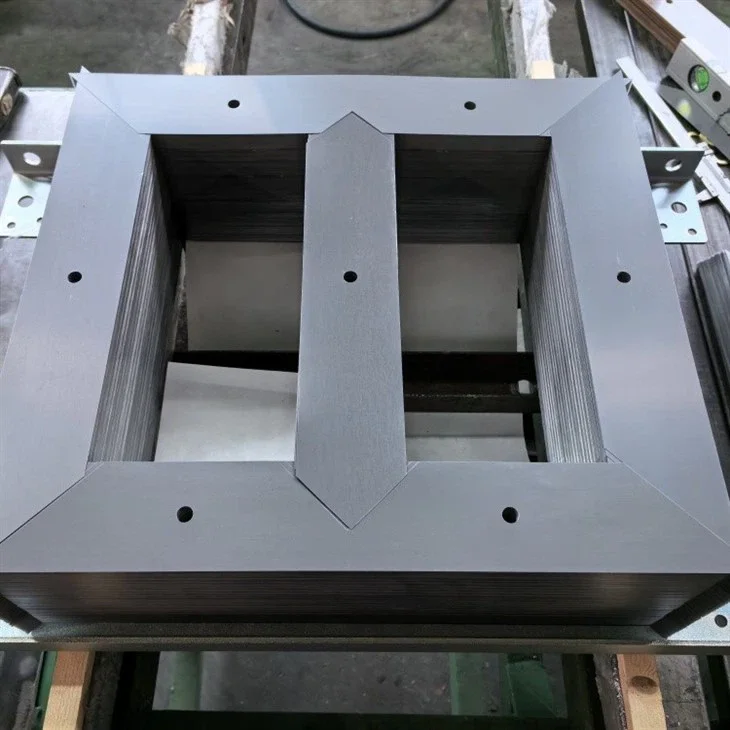
Transformer steel plays a key role in power distribution. Its loss grade shows how much energy the core wastes as heat. Buyers often ask about S13 and S20. These labels refer to specific loss levels. Understanding them helps in selecting the right material. This article explains the common steel grades behind S13 and S20.
Understanding Loss Grades in Transformer Steel
Loss grades measure core loss under standard conditions. Lower loss means higher efficiency. The grading system uses numbers like S13 and S20. These numbers do not come from a single global standard. Instead, they reflect regional or manufacturer-specific norms. In practice, S13 and S20 often map to cold-rolled grain-oriented (CRGO) steel. This steel dominates high-efficiency transformer cores.
Common Steel Grades for S13 Loss Level
S13 usually corresponds to high-grade CRGO steel. Typical examples include grade M0H or 23P90. These materials have low core loss. For instance, 23P90 shows loss around 0.90 W/kg at 1.7 T and 50 Hz. Another match is grade 27P95. It offers slightly higher loss but still meets S13. Manufacturers often label such steel as S13 in their catalogs. Always check the actual loss curve. A direct S13 label may vary by supplier.
Common Steel Grades for S20 Loss Level
S20 represents a higher loss grade than S13. It often maps to standard CRGO steel. Examples include grade M4 or 27P100. These grades show core loss near 1.00 W/kg. Grade 30P105 also fits S20 in many cases. Some producers use S20 for lower-cost cores. These cores still meet basic efficiency rules. However, they waste more energy than S13 cores. So, S20 suits applications where cost matters more than top efficiency.
Key Differences Between S13 and S20 Steel
S13 steel offers lower loss and higher efficiency. S20 steel costs less but loses more energy. The difference comes from grain orientation and thickness. Thinner steel often reduces loss. Better orientation also lowers loss. For example, 23P90 is thinner than 30P105. That thinner gauge helps S13 perform better. In contrast, S20 grades may use thicker sheets. They may also have less perfect grain alignment. These factors raise core loss. As a result, S13 transformers run cooler and save power over time.
How to Match Grades to Loss Requirements
First, identify your required loss limit. Check the standard you follow. Then, look at steel datasheets. Match the loss value at 1.7 T and 50 Hz. For S13, target loss below 1.00 W/kg. For S20, target loss near 1.00 to 1.10 W/kg. Next, confirm the grade name with your supplier. Names like 23P90 or 27P100 are common. Finally, test a sample core if possible. Real-world loss can differ from catalog values.
Practical Selection Advice for Buyers
Choose S13 steel for high-efficiency transformers. It suits renewable energy and grid apps. Choose S20 steel for budget-focused projects. It works for small distribution units. Always request a mill test certificate. That certificate shows actual loss. Also, consider the total cost of ownership. S13 costs more upfront. But it saves electricity over years. S20 costs less now. Yet it may raise operating costs. Balance these factors based on your project needs.
Conclusion: Value Through Correct Grade Selection
S13 and S20 are loss grades, not fixed steel names. S13 typically matches low-loss CRGO grades like 23P90. S20 matches standard CRGO grades like 27P100. Knowing these links helps you buy wisely. You avoid overpaying for unneeded efficiency. You also avoid underperforming cores. Always verify loss values with your supplier. Use the grade that fits your budget and efficiency goals. This approach delivers reliable, cost-effective transformers.





 English
  Japanese
  Korean
  French
  German
  Spanish
  Portuguese
  Russian
  Arabic
  Italian
  Turkish
  Dutch
Dutch  Polish
  Swedish
  Danish
  Norwegian
  Finnish
  Greek
Greek  Hungarian
  Czech
Czech  Romanian
  Bulgarian
  Slovenian
  Croatian
  Slovak
  Malay
Malay  Indonesian
  Thai
Thai  Vietnamese
  Myanmar
  Khmer
Khmer  Lao
Lao  Tagalog
  Hindi
Hindi  Bengali
  Urdu
Urdu  Nepali
  Sinhala
  Hebrew
  Ukrainian
  Serbian
  Icelandic
  Swahili