
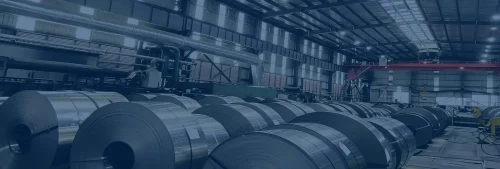
How to match transformer steel grades among Chinese standard, Japanese standard and American standard
Understanding the Need for Cross-Standard Matching

Global sourcing of electrical steel often creates a practical problem. A buyer may need transformer steel that meets a Chinese standard. Yet the original design may refer to a Japanese or American grade. Without a clear cross-reference, procurement becomes slow and risky. This article explains how to match transformer steel grades among Chinese, Japanese, and American standards. It focuses on practical steps and key technical factors.
Core Standards You Will Encounter
Chinese transformer steel grades mainly follow GB/T 2521. Japanese grades come from JIS C 2550. American grades typically follow ASTM A876 or A677. Each system uses different naming rules. For example, Chinese grades often start with a number like 50W470. Japanese grades may use 50A470 or 35JN250. American grades often appear as M-15 or M-19. These codes reflect thickness, core loss, and permeability. Therefore, direct name matching rarely works.
Match by Thickness and Core Loss First
Thickness is the easiest starting point. Chinese and Japanese standards both use millimeters. American standards often use mils or gauge numbers. One mil equals 0.0254 mm. A common Chinese grade like 30Q120 has 0.30 mm thickness. The Japanese equivalent may be 30P120 or 30G120. The American M-15 grade is about 0.36 mm thick. So, always convert units before comparing. Core loss is the next key number. It measures energy lost as heat. Lower core loss means better efficiency. Chinese grades show core loss at 1.7 T and 50 Hz. Japanese grades may use 1.5 T or 1.7 T. American grades often use 1.5 T at 60 Hz. You must adjust for frequency differences to match fairly.
Consider Permeability and Coating Types
Permeability shows how easily magnetic flux flows. High permeability grades save energy in transformer cores. Chinese grades with a Q suffix mean high permeability. Japanese grades with an N suffix also mean high permeability. American grades use numbers like M-15 or M-19. Lower numbers mean lower core loss. Coating type also matters. Chinese and Japanese standards often use C5 or C6 coatings. American standards use similar insulation classes. If coatings differ, the steel may not fit the same lamination process. So, check coating thickness and insulation resistance.
Use Published Cross-Reference Tables Carefully
Many steel makers publish cross-reference tables. These tables link Chinese, Japanese, and American grades. For instance, Chinese 50W470 may match Japanese 50A470. It may also match American M-43 or M-45. However, these tables are guides only. They do not guarantee identical performance. Production tolerances vary by mill. Always request a mill test certificate. The certificate shows actual core loss and thickness. Then compare those values against your design needs. This step prevents costly mistakes.
Test and Validate Before Full Adoption
After a preliminary match, run a small trial. Build a few transformer cores with the proposed substitute. Measure no-load loss and exciting current. Compare results with the original grade. If the difference is under five percent, the match is likely safe. If not, adjust the grade or design. Also, check the stacking factor. It affects core assembly. Chinese and Japanese steels often have similar stacking factors. American steels may differ slightly. Validation protects your warranty and reputation.
Final Value Summary
Matching transformer steel grades across Chinese, Japanese, and American standards requires patience and technical care. Start with thickness and core loss. Then check permeability and coating. Use cross-reference tables as a first screen. Always validate with real tests. This approach reduces supply risk and keeps costs stable. For engineers and buyers, it turns a confusing standard maze into a clear, repeatable process. With the right method, you can source transformer steel globally without sacrificing performance.







 English
  Japanese
  Korean
  French
  German
  Spanish
  Portuguese
  Russian
  Arabic
  Italian
  Turkish
  Dutch
Dutch  Polish
  Swedish
  Danish
  Norwegian
  Finnish
  Greek
Greek  Hungarian
  Czech
Czech  Romanian
  Bulgarian
  Slovenian
  Croatian
  Slovak
  Malay
Malay  Indonesian
  Thai
Thai  Vietnamese
  Myanmar
  Khmer
Khmer  Lao
Lao  Tagalog
  Hindi
Hindi  Bengali
  Urdu
Urdu  Nepali
  Sinhala
  Hebrew
  Ukrainian
  Serbian
  Icelandic
  Swahili